

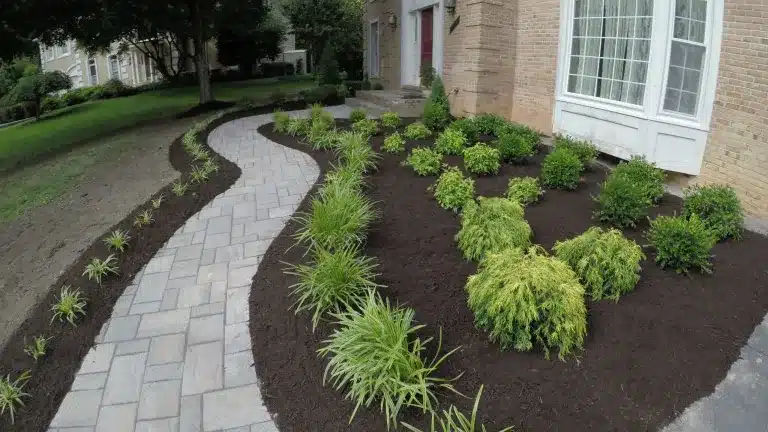
Quick Answer: If your front walkway is cracked, uneven, sinking, or holding water, it is more than a cosmetic issue—it is a safety risk that can lead to trips, falls, and costly damage. For homeowners searching for walkway repair northern virginia, the best time to act is before the problem spreads to nearby steps, drainage areas, or the rest of your hardscape.
Your front walkway is one of the first things people notice about your home, but it also does a job that matters every single day: it gives you, your family, and your guests a safe path to the front door. In Northern Virginia, where freeze-thaw cycles, heavy rain, clay soil, and aging neighborhoods all put pressure on hardscapes, small walkway problems can turn into bigger hazards faster than many homeowners expect. A few lifted pavers, a cracked concrete slab, or a section that slopes toward the house may seem minor at first. But over time, those issues can create standing water, unstable footing, and expensive repairs that go beyond the walkway itself. If you are comparing repair versus replacement, or wondering whether to wait another season, this guide will help you understand what to look for, what it may cost, and when it makes sense to bring in a professional landscaping contractor in Northern Virginia.
Why walkway damage should never be ignored
A damaged walkway is not just an inconvenience. It can become a real liability for homeowners, especially when the surface is uneven or hidden by leaves, snow, or poor lighting. A small crack today can widen after one winter. A paver that has shifted slightly can become a toe-catcher. A concrete slab that has settled near the front steps can create a lip that is hard to see but easy to trip over. These are the kinds of problems that often start small and then become obvious only after someone gets hurt or the damage becomes impossible to ignore. For families with children, older adults, or frequent visitors, the risk is even higher.
In Northern Virginia, walkway damage often develops because of weather and soil conditions rather than just age. Clay-heavy soil can hold moisture and shift when it expands and contracts. Heavy rain can wash out the base under pavers or concrete, causing sections to sink. Winter freeze-thaw cycles can widen cracks and separate joints. In neighborhoods across Fairfax, Arlington, Alexandria, Vienna, and Springfield, it is common to see walkways that were installed years ago and are now settling unevenly because the base was not built to handle local conditions. Once that base starts failing, surface patching may only buy you a little time. If the walkway is already affecting drainage, steps, or the entry path, repair alone may not solve the real problem.
There is also a financial side to ignoring walkway damage. A homeowner who waits too long may end up paying for more than just the walkway. Water that pools near the front entry can damage stoops, foundation areas, and nearby planting beds. Uneven hardscape can also make it harder to maintain the lawn and landscape around it. In some cases, a walkway repair turns into a larger project that includes drainage correction, retaining wall adjustments, or a new patio connection. That is why many homeowners in Northern Virginia choose to address walkway issues early, before they become a safety issue and before they spread into a much bigger outdoor renovation.
Signs you need walkway repair northern virginia homeowners should watch for
The most obvious sign that you need walkway repair northern virginia homeowners should pay attention to is visible cracking, but that is only one of several warning signs. If the walkway has shifted so that one section sits higher than another, that is a trip hazard. If you notice sinking areas, loose pavers, or edges that crumble when stepped on, the base underneath may be failing. Water pooling after rain is another major clue, especially if it stays in the same spot or runs toward your front steps, garage, or foundation. Even if the surface still looks “mostly fine,” these issues can point to deeper structural problems that will not improve on their own.
Another sign is how the walkway feels underfoot. Homeowners often notice a hollow sound, a slight bounce, or movement when stepping on certain areas. That can mean the bedding sand, gravel base, or soil below has shifted. In older homes in areas like Annandale, Falls Church, and Reston, walkways may also show signs of age-related wear such as surface flaking, joint failure, or repeated weed growth between pavers. Weed growth is not just a maintenance issue; it can indicate that joints are opening up and allowing moisture to penetrate the system. Once water gets in, the damage tends to accelerate.
Lighting and visibility matter too. A walkway with uneven edges, dark stains, or cracks can be harder to navigate at night or during bad weather. If guests regularly use the front entrance, or if delivery drivers and service providers need to access the home, a walkway that looks worn or unstable can make the property feel neglected and unsafe. In some cases, homeowners do not realize how serious the problem is until they compare the walkway to nearby hardscape features like a patio, retaining wall, or driveway apron. If the walkway is failing while the rest of the landscape is still in good shape, it may be the right time to repair or replace it before the issue spreads and the project becomes more expensive.
Repair or replacement: how to decide what makes sense
Choosing between repair and replacement depends on the type of damage, the age of the walkway, and whether the underlying base is still stable. If the problem is limited to a few cracked pavers, a small lifted section, or a minor surface defect, targeted repair may be the most cost-effective option. This is especially true if the walkway was installed properly and the rest of the structure is sound. A professional can often reset pavers, replace damaged stones, relevel sections, or repair joints without rebuilding the entire path. For homeowners who want to preserve the existing design and keep costs down, that can be a smart short-term solution.
Replacement becomes the better choice when the damage is widespread or the walkway has deeper structural issues. If multiple sections are sinking, if the slope is wrong, or if water is consistently pooling near the entry, patching the surface will not fix the root cause. In those cases, a new walkway may be the only way to create a safe, durable result. Replacement also makes sense when the walkway is outdated, too narrow, or no longer matches the home’s style. Many homeowners in Northern Virginia choose to upgrade their walkway at the same time as other exterior improvements, such as a new patio, drainage correction, or lawn installation, because it creates a more polished and functional front yard overall.
A good rule of thumb is this: if the issue is isolated and the base is stable, repair may be enough. If the damage is recurring, spreading, or linked to drainage and settlement, replacement is usually the better long-term investment. A reputable contractor should inspect not only the visible surface but also the grading, soil conditions, and surrounding hardscape. That is especially important in neighborhoods with older homes, sloped lots, or heavy clay soil. The goal is not just to make the walkway look better. It is to make sure it performs safely for years, not months. For many homeowners, that means making a decision based on the whole system, not just the cracked area they can see from the front door.
Cost factors that affect walkway repair and replacement
Walkway costs can vary widely because no two properties are exactly alike. The biggest factor is whether you are repairing a small section or replacing the entire walkway. Minor repairs may be relatively affordable, especially if the contractor can reuse existing materials and only needs to reset or replace a limited area. But once the project involves excavation, base rebuilding, drainage correction, or full replacement, the price rises quickly. Labor is often a major part of the total because proper hardscape work requires careful grading, compaction, and installation—not just surface patching.
Material choice also plays a big role. Concrete is often less expensive upfront, but it can crack and settle over time, especially if the base is not ideal. Pavers usually cost more, but they offer better design flexibility and can be repaired more easily in the future because individual units can be lifted and reset. Natural stone can create a high-end look, but it usually comes with higher material and labor costs. If your project includes matching existing stonework, tying the walkway into a patio, or building new steps or retaining walls, the price will increase further. Site conditions matter too. A flat, accessible front yard is easier to work on than a steep lot, a narrow side yard, or a property with poor drainage and limited equipment access.
For Northern Virginia homeowners, it is also important to think beyond the walkway itself. If the underlying problem is caused by water runoff, you may need drainage improvements such as regrading, French drains, or downspout redirection. If the walkway is failing because the entry area is too steep, your project may need a retaining wall or step redesign. These additions can push a project into the $3,000+ range quickly, but they also create a more complete and lasting solution. In many cases, homeowners save money over time by fixing the cause now instead of paying for repeated patchwork later. A professional estimate should clearly explain what is cosmetic, what is structural, and what is optional so you can make an informed decision without guessing.
Local Northern Virginia considerations that change the repair plan
Northern Virginia presents unique conditions that make walkway repair and replacement more complex than many homeowners expect. Freeze-thaw cycles can open cracks and loosen pavers. Clay soil can hold water and shift when saturated. Heavy spring and summer storms can wash out base material or create runoff that undermines the walkway edge. In communities like Burke, Lorton, Fairfax Station, Clifton, and Woodbridge, sloped lots and mature landscaping can also make drainage problems harder to spot until the hardscape starts moving. What looks like a simple surface issue may actually be a grading issue, a soil issue, or both.
Older neighborhoods in Arlington, Alexandria, and Falls Church often have walkways that were built decades ago and are now showing their age. In those areas, homeowners may be dealing with settlement around older front stoops, narrow entry paths, or mismatched additions from previous repairs. In newer communities like Reston, Herndon, Sterling, and Newington, the issue may be less about age and more about drainage patterns, builder-grade materials, or landscaping that has changed over time as trees matured and soil shifted. Even the same style of walkway can perform differently depending on shade, root growth, and how water moves across the property.
This is why local experience matters. A contractor familiar with Northern Virginia will look at more than the broken surface. They will consider how the walkway connects to the driveway, front steps, planting beds, lawn, and any nearby retaining walls or patios. They will also understand how to build for local weather and soil conditions so the new or repaired walkway lasts. For homeowners, that means the best solution is often not the cheapest one on paper, but the one that prevents recurring problems. If you are planning a larger exterior upgrade, this may also be the right time to combine walkway work with lawn installation, drainage improvements, or a patio project so the entire front yard works together instead of fighting against itself.
What a professional walkway project can include beyond the walkway itself
Many homeowners start by asking for walkway repair, but once a contractor evaluates the property, the real issue may turn out to be part of a larger outdoor system. For example, a walkway that keeps sinking near the front steps may be affected by poor drainage from the roof or driveway. A walkway that cracks near a retaining wall may be under pressure from soil movement. A walkway that stays wet and muddy may need grading changes or lawn installation to improve runoff and reduce erosion. In these cases, the best long-term result often comes from addressing the whole area, not just the visible damage.
That is one reason walkway projects can become valuable lead-generation opportunities for homeowners who are already thinking about other upgrades. If your front entry feels outdated, a new walkway can be paired with a patio extension, a refreshed planting bed, or a more durable retaining wall to create a stronger overall design. If the front yard has drainage issues, the project may include regrading, downspout management, or hardscape adjustments that protect the home and improve curb appeal. These improvements are especially useful when the goal is to increase safety while also making the property look more finished and welcoming.
Homeowners often ask whether it is worth investing in a larger project instead of just patching the problem. The answer depends on how much of the system is failing and what your long-term goals are for the property. If you plan to stay in the home, a more complete solution can reduce maintenance and improve daily use. If you are thinking about resale, a safe and attractive front entry can make a strong first impression for buyers. In either case, a professional landscaping company can help you understand which upgrades are essential, which are optional, and which ones will give you the best return for your budget. That kind of guidance is especially valuable when the project involves multiple elements and a total investment of several thousand dollars or more.
Homeowner decision checklist
- Do you see cracks, lifting, sinking, or separation in the walkway surface?
- Does water pool on or near the walkway after rain?
- Have you noticed trip hazards, loose pavers, or uneven edges?
- Is the damage getting worse after winter or heavy storms?
- Does the walkway connect to other problem areas like steps, drainage, or a retaining wall?
- Are you planning a larger front yard improvement, such as a patio, lawn installation, or drainage upgrade?
- Would a repair only hide the problem instead of fixing the cause?
- Is the walkway affecting curb appeal, safety, or daily use of the front entrance?
Why choose Image Works Landscaping
Image Works Landscaping helps Northern Virginia homeowners solve walkway problems with a practical, design-focused approach that goes beyond surface fixes. If your walkway needs repair or replacement, our team looks at the full picture: grading, drainage, soil conditions, surrounding hardscape, and how the front entry fits into the rest of your landscape. That matters because a walkway that is built without addressing the underlying issue may fail again, while a properly planned project can last for years and improve the look and function of your home at the same time.
We work with homeowners throughout Annandale, Arlington, Alexandria, Franconia, Kingstowne, Fairfax, Fairfax Station, Falls Church, Oakton, Vienna, Union Mill, Newington, Springfield, West Springfield, North Springfield, Burke, Lorton, Clifton, Reston, Herndon, Sterling, Woodbridge, and surrounding Northern Virginia communities. Whether your project calls for walkway repair northern virginia homeowners can trust, a full replacement, drainage improvements, or a larger outdoor upgrade that includes patios, retaining walls, or lawn installation, we focus on durable results and clear communication from start to finish. Our goal is to help you make the right decision for your property, not just the fastest one.
Homeowners choose Image Works Landscaping because we understand that front entry projects are both functional and personal. You want your home to feel safe, welcoming, and well cared for. We help make that happen with thoughtful planning, quality workmanship, and solutions tailored to local conditions. If the walkway is the first sign of a bigger issue, we can help you identify it early and build a plan that protects your home and your budget.
Conclusion: fix the problem before it becomes a bigger one
A damaged front walkway is one of those issues that is easy to postpone and expensive to ignore. What starts as a small crack, a loose paver, or a slightly uneven section can quickly turn into a safety issue, especially in Northern Virginia where weather and soil conditions are tough on hardscapes. If you have been searching for walkway repair northern virginia and wondering whether now is the right time, the answer is usually yes when the damage is visible, recurring, or affecting drainage and footing. The sooner you address it, the more options you usually have—and the less likely you are to face a larger repair later.
If your walkway is showing signs of wear, now is the time to get a professional opinion. Image Works Landscaping can inspect the problem, explain whether repair or replacement makes more sense, and help you plan a solution that fits your home, your goals, and your budget. Contact us today to schedule a consultation and take the first step toward a safer, better-looking front entry.
FAQs
How do I know if my walkway needs repair or full replacement?
If the damage is limited to one area and the base is still stable, repair may be enough. If the walkway is sinking, repeatedly cracking, or causing drainage problems, replacement is usually the better long-term option.
How much does walkway repair usually cost in Northern Virginia?
Costs vary based on the size of the damage, material type, and site conditions. Small repairs may be relatively modest, while full replacement or projects that include drainage or grading improvements can move into the several-thousand-dollar range.
Can a cracked walkway really be a safety hazard?
Yes, especially if the surface is uneven, loose, or hard to see at night. Trip hazards become more serious when they are near front steps, entry paths, or areas where guests and family members walk regularly.
Will fixing the walkway also help with drainage?
Sometimes, but not always. If water is pooling because of grading or runoff issues, the project may need drainage work in addition to walkway repair or replacement.
Is it worth replacing an older walkway if it still looks okay?
If the structure is failing underneath, waiting usually leads to higher costs later. Replacing an aging walkway can also improve curb appeal, safety, and the overall look of the front yard.
Can walkway work be combined with other landscaping projects?
Yes, and that is often the smartest approach. Many homeowners combine walkway improvements with patios, retaining walls, drainage upgrades, or lawn installation to create a more complete and cost-effective project.