

Quick Answer: If you have standing water in your yard, the best time to address it is before Northern Virginia’s summer storms make the problem worse. The most effective yard drainage solutions northern virginia homeowners rely on usually include regrading, French drains, catch basins, downspout extensions, retaining walls, and in some cases a new lawn installation after the drainage issue is corrected.
Standing water is more than a nuisance. It can drown grass roots, attract mosquitoes, damage foundations, and turn a usable backyard into a muddy mess after every heavy rain. For homeowners in Northern Virginia, where clay-heavy soils and sudden summer downpours are common, solving drainage problems early can protect both your landscape investment and your home.
Why Standing Water Happens in Northern Virginia Yards
Standing water usually appears when rain has nowhere to go. In many Northern Virginia neighborhoods, the soil has a high clay content, which drains slowly and holds water near the surface. That means even a moderate storm can leave behind puddles that linger for hours or days. In areas like Fairfax, Vienna, Springfield, and Alexandria, older lots may also have grading issues from past landscaping, settling soil, or additions that changed the way water moves across the property.
Another common cause is poor runoff from the house itself. If gutters overflow or downspouts discharge too close to the foundation, water can pool in low spots near the home or wash across the lawn in concentrated paths. Homeowners in places like Reston, Herndon, and Arlington often notice that the problem gets worse after a few years because the original grading has shifted, nearby landscaping has matured, or neighboring properties now send more runoff toward the yard.
There are also design-related causes. A patio that sits too low, a retaining wall without proper drainage, compacted soil from construction traffic, or a lawn that was installed before the drainage issue was fixed can all create standing water. In some cases, the yard may look level to the eye but actually have subtle depressions that trap water after every storm. That is why a professional drainage assessment matters: the visible puddle is often just the symptom, not the root cause.
Best Yard Drainage Solutions Northern Virginia Homeowners Should Consider
When homeowners search for yard drainage solutions northern virginia, they are usually looking for a fix that will actually last through heavy rain, not just a temporary patch. The right solution depends on where the water collects, how much runoff is involved, and whether the issue is tied to the home, the lawn, or hardscape features like patios and walkways. In many cases, the best answer is a combination of solutions rather than just one.
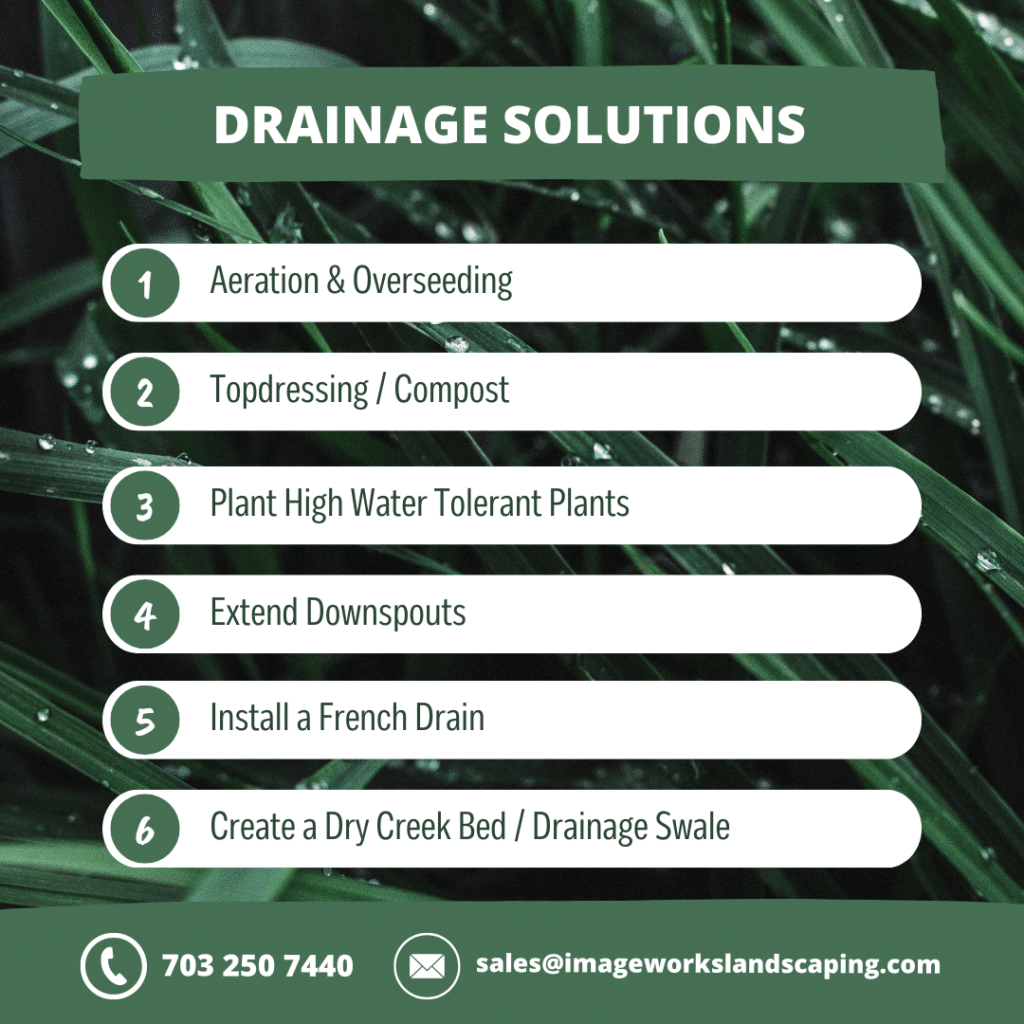
Regrading is often the first step when the yard slopes the wrong way. By reshaping the soil so water moves away from the house and toward a proper outlet, regrading can eliminate shallow pooling and protect the foundation. French drains are another common option, especially for yards that stay soggy even after the rain stops. These systems collect water underground and move it away through perforated pipe and gravel, which makes them useful in clay-heavy soils common throughout Northern Virginia.
Catch basins and channel drains are often used where water flows across patios, driveways, or low points in the lawn. A catch basin collects surface water and directs it into a buried drainage line, while channel drains are ideal for hardscape edges where runoff needs to be intercepted quickly. Downspout extensions are a relatively simple but important fix, because roof runoff can overwhelm a yard if it is dumped too close to the house. In some properties, retaining walls with built-in drainage are the best long-term answer, especially on sloped lots in places like Burke, Clifton, Lorton, and Fairfax Station. Once the drainage issue is corrected, lawn installation can restore the area with turf that has a real chance to thrive instead of failing in wet soil.
How to Tell Whether You Need a Simple Fix or a Full Drainage Project
Not every wet yard requires a major construction project, but homeowners should be realistic about what a simple fix can and cannot solve. If water only collects in one shallow area after a very heavy storm and disappears within a few hours, the issue may be manageable with downspout extensions, minor grading, or a small drain line. If the lawn stays saturated for days, the grass is thinning, or you can hear squishing underfoot long after the rain has stopped, the problem is usually more serious.
A good rule of thumb is to think about frequency, duration, and location. If standing water happens every time it rains, if it is forming near your foundation, or if it is affecting a patio, retaining wall, or walkway, you likely need a more complete drainage plan. Homeowners in communities like Annandale, Oakton, and West Springfield often discover that repeated patching is more expensive over time than fixing the source correctly. A lawn that keeps failing because of poor drainage may need excavation, soil correction, and a new turf installation after the water issue is addressed.
It is also worth considering how you use the space. A backyard that is supposed to support children, pets, entertaining, or future hardscaping cannot stay muddy and unreliable. If you are planning a patio, retaining wall, or major landscape upgrade, drainage should be part of the project from the beginning. Otherwise, you may end up paying twice: once for the new feature and again to repair the damage caused by water that was never properly managed. For many homeowners, the smartest decision is to have a drainage professional evaluate the site before summer storm season begins.
Cost Considerations for Drainage Repairs and Landscape Restoration
Drainage costs in Northern Virginia can vary widely because every yard has different soil conditions, access challenges, and project complexity. A simple downspout extension or minor grading correction may be relatively affordable, while a full French drain system, catch basin network, or retaining wall with drainage can become a larger investment. The price usually depends on how much excavation is needed, how far water must be moved, whether the area is accessible for equipment, and whether existing landscaping must be removed and replaced.
For homeowners, it helps to think beyond the upfront price. A cheaper fix that fails in the next storm can cost more in the long run if it damages the lawn, patio, or foundation. In many cases, the best value comes from solving the drainage issue and restoring the area at the same time. That may include regrading, installing a drain system, and then completing lawn installation so the finished yard looks intentional rather than patched together. If the project involves a retaining wall, the drainage component is especially important because water pressure behind the wall can create expensive structural problems if it is ignored.
Labor also matters. Skilled drainage work requires proper diagnosis, excavation, pipe placement, slope calculations, and careful restoration of the landscape. In neighborhoods with tighter access, mature trees, or existing hardscape, the labor portion may rise because the crew has to work more carefully to protect surrounding features. Homeowners should also factor in the cost of doing nothing. Standing water can kill turf, create mosquito breeding areas, and increase the chance of erosion or foundation issues. When a drainage project is designed well, it protects the property and often supports higher-value improvements like patios, retaining walls, and full lawn renovation.
Local Northern Virginia Considerations That Affect Drainage Performance
Northern Virginia is not a one-size-fits-all market when it comes to drainage. Soil type, lot slope, neighborhood age, and storm intensity all influence what works best. In older communities like Arlington, Alexandria, and Falls Church, many properties have compacted soils, limited yard space, and aging drainage infrastructure. That often means water has fewer places to go and more obstacles in its path. In newer or more suburban areas like Sterling, Woodbridge, and Newington, the issue may be tied to grading from development, runoff from neighboring lots, or long stretches of turf that never received proper drainage planning.
Summer storms in this region can be intense and fast-moving. A yard that seems fine during a light rain may fail during a sudden downpour because the soil cannot absorb water quickly enough. That is why homeowners in Fairfax, Vienna, Reston, and Herndon often need solutions that handle both surface water and subsurface saturation. A drainage system that works in one part of the region may need to be adjusted for another property just a few miles away because of slope, clay content, or the way the lot was originally built.
Local plantings and landscape features matter too. Mature trees can absorb water, but their roots can also complicate excavation. Patios and retaining walls can redirect water in ways that create new problem areas if they were installed without drainage planning. Even lawn installation needs to be timed correctly because new sod or seed will struggle if the soil stays too wet. For Northern Virginia homeowners, the best results usually come from a drainage plan that is tailored to the property instead of copied from a generic solution online.
What a Professional Drainage Project Usually Includes
A professional drainage project starts with a site evaluation. The goal is to identify where water enters the yard, where it collects, and where it should go instead. A good contractor will look at the slope of the property, the condition of gutters and downspouts, the soil type, and any hardscape or structural features that may be contributing to the problem. This step is important because the wrong fix can send water into another low spot or create a new issue near the foundation.
Once the cause is clear, the project may include excavation, pipe installation, gravel bedding, catch basins, regrading, or the addition of a dry well or outlet line. In some cases, the drainage work is integrated with a retaining wall or patio project so the entire landscape functions as one system. That is often the best approach for homeowners who want a long-term solution and a cleaner finished look. If the lawn has already been damaged by standing water, the final step may include soil amendment and lawn installation so the yard can recover properly.
Homeowners should also expect the contractor to think about maintenance. A well-designed system should be easy to inspect and service. For example, catch basins should be accessible, and downspouts should be routed in a way that prevents clogs from causing backup. This is one reason professional installation is often worth the investment. A drainage system is not just about moving water once; it is about making sure the yard continues to perform through years of storms, seasonal changes, and normal wear.
Homeowner Decision Checklist
- Water stays in the same area after most storms
- The lawn feels soggy or spongy for more than 24 hours
- Standing water is near the foundation, patio, or retaining wall
- Grass is thinning, yellowing, or dying in wet spots
- Mosquitoes are becoming a problem in the yard
- Downspouts discharge too close to the house
- You are planning a patio, retaining wall, or lawn installation
- You want a long-term fix instead of repeated patching
Why Choose Image Works Landscaping for Drainage in Northern Virginia
Image Works Landscaping understands that drainage problems are rarely isolated. A wet lawn can affect the patio, the retaining wall, the foundation, and the long-term health of the landscape. That is why our approach focuses on solving the root cause first and then restoring the property with solutions that make sense for the homeowner’s goals. Whether the project calls for regrading, a French drain, a catch basin, or a larger landscape redesign, we build drainage plans that are practical, durable, and tailored to Northern Virginia conditions.
Homeowners choose Image Works Landscaping because we work on the kinds of projects that create real value: drainage improvements, patios, retaining walls, and lawn installation. Those are the upgrades that transform a problem yard into a usable outdoor space. We also understand the local challenges that come with clay soil, heavy rain, sloped lots, and older residential properties throughout Annandale, Arlington, Alexandria, Fairfax, Vienna, Reston, Herndon, Sterling, Woodbridge, and surrounding communities.
Most importantly, we help homeowners make confident decisions. If a small fix will solve the issue, we will explain that. If the property needs a larger project to prevent ongoing damage, we will show you why. That kind of honest guidance matters when you are deciding whether to invest now or wait until after the next storm. With Image Works Landscaping, you get a local partner focused on long-term results, not temporary patches.
Fix Standing Water Before Summer Storms Make It Worse
If you are already seeing puddles, muddy spots, or soggy grass, now is the time to act. Summer storms can turn a manageable drainage issue into a bigger and more expensive problem, especially in Northern Virginia where intense rainfall can overwhelm poorly graded yards in a matter of minutes. The right yard drainage solutions northern virginia homeowners choose will protect the lawn, reduce erosion, and help your outdoor space stay functional through the wettest months of the year.
Whether your property needs regrading, a French drain, catch basins, downspout extensions, a retaining wall, or a full lawn installation after drainage work, the key is to address the source of the water before it causes more damage. Image Works Landscaping can evaluate your yard, explain your options, and design a solution that fits your property and your goals. If you want a dry, usable yard before the next storm season, contact Image Works Landscaping today to schedule a drainage consultation and get expert help from a trusted Northern Virginia landscaping team.
Frequently Asked Questions
How do I know if my yard needs drainage work or just minor grading?
If water only pools briefly after a major storm, minor grading or downspout changes may be enough. If the yard stays wet for days, the grass is dying, or water is near the foundation, you likely need a more complete drainage solution.
What is the most effective drainage solution for a soggy lawn?
The best solution depends on the source of the water, but French drains and regrading are among the most common long-term fixes. In many Northern Virginia yards, a combination of surface drainage and underground drainage works best.
How much do drainage repairs usually cost in Northern Virginia?
Costs vary based on the size of the problem, soil conditions, and access to the site. Small fixes may be relatively affordable, while larger projects involving excavation, retaining walls, or lawn restoration can become a significant investment.
Can I install new sod before fixing the drainage problem?
You can, but it is usually a mistake if the soil is still holding water. New sod or seed will struggle in wet ground, and the lawn may fail again unless the drainage issue is solved first.
Will a retaining wall help with standing water?
A retaining wall can help manage slope and redirect water, but it must be built with proper drainage behind it. Without drainage planning, a retaining wall can actually trap water and create new problems.
When is the best time to fix drainage problems in Northern Virginia?
The best time is before the heavy summer storms arrive, while the ground is still workable and the problem is easier to diagnose. Fixing drainage early can prevent lawn damage, erosion, and more expensive repairs later.