

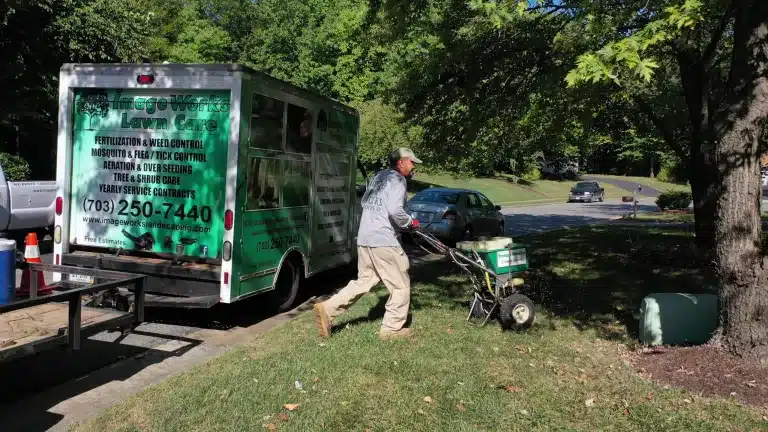
Quick answer: July fertilization can help a Northern Virginia lawn recover from stress, but only when it is timed and applied correctly. For many homeowners, the best approach is a light, strategic feeding paired with proper watering, mowing, and soil care rather than a heavy fertilizer application that can burn grass in the heat.
If you are searching for lawn fertilization northern virginia homeowners can trust in the middle of summer, the biggest mistake is treating July like spring. Northern Virginia lawns face intense heat, humidity, clay-heavy soils, compacted turf, and inconsistent rainfall, all of which can weaken grass quickly. A lawn that looked healthy in May may already be thinning, turning dull, or developing brown patches by July. That does not always mean the lawn is failing permanently, but it does mean the grass needs a different kind of support. The right fertilization strategy in July is less about pushing fast growth and more about helping roots stay strong, reducing stress, and preparing the lawn for late-summer recovery and fall renovation. For homeowners in places like Fairfax, Arlington, Alexandria, Vienna, Reston, Springfield, and surrounding Northern Virginia communities, this is also the season when lawn problems start to overlap with drainage issues, compacted soil, bare spots, and landscape projects that may require more than fertilizer alone. Knowing when to fertilize, when to wait, and when to bring in a professional can save money and protect your yard from avoidable damage.
Why July Is a Stressful Month for Northern Virginia Lawns
July is one of the hardest months of the year for turf in Northern Virginia. The region often sees long stretches of heat, high humidity, and periods of dry weather interrupted by sudden storms. That combination is tough on cool-season grasses like tall fescue, Kentucky bluegrass, and perennial ryegrass, which are common in residential lawns throughout Fairfax County, Arlington County, Alexandria, Loudoun County, and Prince William County. These grasses naturally prefer cooler conditions, so when soil temperatures rise and rainfall becomes inconsistent, the lawn shifts into survival mode. Growth slows, roots become more vulnerable, and the turf can start showing signs of stress even if it was fertilized earlier in the year.
Homeowners often notice the first signs in the form of faded color, footprints that stay visible longer than usual, or areas that dry out faster than the rest of the yard. Sloped lawns, compacted front yards, and areas near driveways, patios, and retaining walls tend to suffer first because they heat up faster and drain differently. In neighborhoods across Annandale, Burke, West Springfield, and Herndon, it is common to see lawns that are greener near shaded tree lines but thin and patchy in open sun. Fertilization can help, but only if the lawn is actually in a condition to use the nutrients. If the soil is too dry or the turf is already severely stressed, a heavy feeding can do more harm than good. That is why July lawn care in Northern Virginia has to be based on site conditions, not just the calendar.
Another reason July is challenging is that many lawns are already carrying damage from earlier in the season. Spring weeds, compacted soil from foot traffic, and poor drainage can all leave turf weaker going into summer. If your yard has low spots that hold water after storms, or if your lawn borders a patio, retaining wall, or driveway where heat reflects back into the grass, those microclimates can create uneven stress across the property. In those cases, fertilization should be part of a larger plan that may include drainage correction, soil improvement, or even lawn installation in the worst areas.
What Lawn Fertilization in Northern Virginia Should Do in Summer
In July, fertilization should support the lawn without forcing a surge of tender new growth. That distinction matters because fast growth in extreme heat can make turf more vulnerable to disease, drought stress, and insect activity. A well-planned summer application is designed to maintain color, support root strength, and help the grass recover from wear. For homeowners in Northern Virginia, the goal is not to create a lush, spring-like lawn overnight. The goal is to keep the turf stable enough to survive summer and enter fall in a healthier condition.
Professional lawn fertilization northern virginia homeowners rely on typically starts with an evaluation of grass type, soil condition, sun exposure, and irrigation habits. A lawn in Vienna with mature trees and partial shade may need a different program than a full-sun yard in Lorton or Sterling. Likewise, a property with newly installed sod in Alexandria may need a different nutrient balance than an older lawn in Fairfax Station that has been compacted by years of use. In summer, many lawns benefit more from slow-release nutrients and balanced feeding than from high-nitrogen products that push rapid top growth. Slow-release fertilizer helps the lawn absorb nutrients over time, which is especially important when temperatures are high and watering is inconsistent.
Summer fertilization can also be part of a broader recovery strategy. If the lawn has thin areas from pets, kids, or heavy use, a careful feeding may help those spots fill in later. If the lawn is being prepared for overseeding or renovation in late summer or early fall, July can be used to stabilize the turf so it is ready for more aggressive work later. This is especially important for homeowners considering larger projects like lawn installation, drainage correction, or retaining wall improvements that may affect grading and turf health. Fertilizer alone will not fix a yard with poor drainage or severe soil compaction, but it can be an important step in a larger landscape plan.
When to Fertilize, When to Wait, and When to Call a Pro
One of the most common homeowner questions in July is whether they should fertilize immediately or wait until temperatures cool down. The answer depends on the condition of the lawn. If the turf is green but stressed, has adequate moisture, and is not showing signs of disease, a light summer feeding may be appropriate. If the lawn is brown, crispy, or dormant-looking because of drought stress, fertilizing too heavily can waste product and potentially damage the grass. If you are unsure whether the lawn is dormant, diseased, or simply heat-stressed, it is usually smarter to pause and get a professional opinion before applying anything.
There are also situations where fertilization should be delayed because another issue is more urgent. For example, if water is pooling near the foundation, washing across the lawn after storms, or leaving soggy patches near a patio or retaining wall, drainage problems may be the real reason the turf is declining. In that case, fertilizer will not solve the underlying issue. The same is true if the lawn has compacted soil from construction, heavy use, or poor grading. In areas like Arlington, Alexandria, and Falls Church, where many properties have limited yard space and older landscapes, drainage and compaction are often the hidden reasons lawns struggle in summer. A professional can determine whether the lawn needs fertilization now, a soil amendment plan, or a more substantial fix such as regrading, drainage installation, or partial lawn replacement.
Calling a pro is also a smart move when the lawn is part of a larger outdoor project. If you are planning a new patio, a retaining wall, or a major landscape renovation, the lawn may need to be protected or re-established after construction. In those cases, fertilization is only one piece of the plan. A contractor who understands both turf health and hardscape installation can help you avoid spending money on short-term fixes when a longer-term solution would create better results and better curb appeal.
Cost Considerations for July Fertilization and Lawn Recovery
Cost is a major factor for homeowners deciding whether to fertilize in July or wait until fall. A basic fertilizer application is usually less expensive than a full lawn renovation, but the real cost depends on the condition of the property. Smaller, straightforward lawns with good access and healthy turf are typically more affordable to treat. Larger properties, sloped yards, heavily shaded areas, and lawns with drainage issues often require more labor, more product, and more time to apply the right solution correctly. In Northern Virginia, where many homes have complex lot layouts, mature landscaping, and hardscape features, pricing can vary significantly from one property to the next.
Homeowners should also consider the cost of doing the wrong thing at the wrong time. A heavy DIY fertilizer application in July can lead to burned grass, wasted product, and additional repair costs later. If the lawn becomes patchy or thin after a poor application, you may end up paying for overseeding, soil correction, or even new sod. That is why professional guidance can be more cost-effective than repeated trial and error. A company experienced in lawn fertilization northern virginia properties need in summer can help you avoid unnecessary applications and focus your budget where it will make the biggest difference.
It is also worth comparing fertilization costs with the cost of broader landscape improvements. If your lawn is failing because of drainage, compacted soil, or poor grading, a one-time fertilizer application may not be the best investment. In some cases, spending more on a drainage solution, a retaining wall to control runoff, or a lawn installation project can save money over time by reducing maintenance and preventing recurring damage. For homeowners in communities like Reston, Burke, Springfield, and Woodbridge, where yards often deal with slope, runoff, and heavy use, the best value is usually found in a plan that addresses the root cause instead of repeatedly treating symptoms.
Local Northern Virginia Factors That Change the Right Fertilization Plan
Northern Virginia is not one uniform lawn market. Soil, shade, drainage, and neighborhood layout can vary dramatically even within a few miles. Clay-heavy soil is common in many parts of the region, and that soil tends to hold water when it is wet and become hard when it dries out. That makes nutrient movement less predictable and can limit how well fertilizer performs. In older neighborhoods in Arlington, Alexandria, and Falls Church, mature trees can create deep shade and root competition, which makes turf thinner and more sensitive to summer stress. In newer or more open developments in areas like Lorton, Sterling, and Newington, lawns may get more direct sun and heat, which can dry them out faster and increase the need for careful watering and balanced feeding.
Microclimates matter too. A front lawn that faces west may get blasted by afternoon sun and heat, while a backyard shaded by trees may stay cooler but struggle with airflow and moisture retention. A yard with a patio, retaining wall, or driveway nearby may hold extra heat and dry out unevenly. These details affect how fertilizer should be selected and applied. They also affect whether fertilization should be combined with other services. For example, if a lawn slopes toward the house and water runs off too quickly, a drainage improvement may be a more important investment than another round of fertilizer. If the turf is too thin to recover, lawn installation may be the better path. If the yard needs better structure or erosion control, a retaining wall may protect both the lawn and the landscape long term.
That local perspective is one reason homeowners in Fairfax, Vienna, Oakton, Clifton, and surrounding areas often prefer a company that understands the region’s soil and weather patterns. A national one-size-fits-all program may not account for the way summer stress shows up in Northern Virginia. Local expertise helps ensure that fertilization is part of a practical, property-specific plan rather than a generic seasonal service.
Homeowner Decision Checklist for July Lawn Fertilization
Before you fertilize in July, it helps to step back and evaluate the lawn like a professional would. Use this checklist to decide whether to move forward, wait, or call for an assessment:
- The lawn is green or only lightly stressed, not fully brown or dormant.
- Soil has enough moisture to support nutrient uptake.
- There are no obvious signs of active disease, fungus, or insect damage.
- Drainage is functioning properly and water is not pooling in low areas.
- The yard is not already recovering from recent construction or grading work.
- You know your grass type and whether it is a cool-season lawn common in Northern Virginia.
- You want a light summer feeding, not a fast-growth push.
- You are also considering larger improvements like drainage, patio work, retaining walls, or lawn installation.
If several of these items are unclear, that is usually a sign to get professional help before applying fertilizer. Homeowners often save time and money by getting the lawn evaluated once instead of making multiple guess-based decisions throughout the summer. This is especially true for properties with mixed sun exposure, uneven grading, or thin turf around hardscape features. A good assessment can tell you whether July fertilization makes sense now or whether the lawn would benefit more from a different service plan.
Why Choose Image Works Landscaping for Lawn Fertilization in Northern Virginia
Image Works Landscaping is a strong choice for homeowners who want more than a basic fertilizer application. The company understands that healthy turf is connected to the rest of the landscape, including drainage, grading, patios, retaining walls, and lawn installation. That matters in Northern Virginia, where many summer lawn problems are caused by underlying site conditions rather than fertilizer alone. Instead of treating every yard the same, Image Works Landscaping looks at the whole property and recommends the right solution for the season and the site.
For homeowners in Annandale, Arlington, Alexandria, Franconia, Kingstowne, Fairfax, Fairfax Station, Falls Church, Oakton, Vienna, Union Mill, Newington, Springfield, West Springfield, North Springfield, Burke, Lorton, Clifton, Reston, Herndon, Sterling, Woodbridge, and nearby communities, that local experience is valuable. Whether you are trying to protect a lawn through summer stress, improve curb appeal before listing a home, or plan a larger outdoor project, you want a contractor who can connect the dots between turf health and landscape performance. Image Works Landscaping is positioned to help with high-value improvements that go beyond routine maintenance, including drainage solutions, retaining walls, patios, and full lawn installation when a simple treatment is not enough.
Homeowners also appreciate working with a company that can help them make a smart decision about timing. If July fertilization is the right move, it can be done with the proper product and application strategy. If it is too soon, too risky, or likely to be ineffective because of site conditions, you will know that before spending money. That kind of guidance builds trust and helps protect your investment.
Conclusion: Make the Right July Lawn Decision Before Summer Stress Gets Worse
July is not the month for guesswork when it comes to lawn care. In Northern Virginia, heat, humidity, clay soil, drainage issues, and uneven sun exposure can all push a lawn into stress quickly. The right fertilization strategy can help your grass stay healthy, but only if it is matched to the lawn’s actual condition. For many homeowners, the smartest move is a careful, professional assessment that looks beyond the surface and identifies whether fertilization, drainage correction, lawn installation, or another landscape improvement will deliver the best result.
If you are considering lawn fertilization northern virginia homeowners can rely on during the summer, Image Works Landscaping can help you make the right call. From Fairfax and Arlington to Reston, Springfield, and Woodbridge, our team understands how local conditions affect lawn health and how to build a plan that protects your property. If your yard needs more than a quick fix, we can also help with patios, retaining walls, drainage improvements, and lawn installation that create lasting value. Contact Image Works Landscaping today to discuss your lawn and get a professional recommendation before summer stress turns into a bigger problem.