

Quick Answer: The best patio materials Northern Virginia homeowners usually choose are natural stone, high-quality pavers, and properly installed concrete because they handle freeze-thaw cycles, heavy rain, and seasonal soil movement better than cheaper alternatives. In Alexandria, Reston, and Burke, the right patio material depends on drainage, shade, slope, and how much maintenance you want to take on over time.
If you are planning a new patio in Northern Virginia, the material you choose matters just as much as the design. Our weather is hard on outdoor surfaces. One season brings heavy rain and humidity, the next brings freezing temperatures, and many neighborhoods in Alexandria, Reston, and Burke deal with clay-heavy soil, runoff issues, and shaded yards that stay damp longer than homeowners expect. That means a patio that looks great on day one can start shifting, cracking, staining, or growing moss if the wrong material is installed the wrong way. For homeowners comparing options, the goal is not just to find something attractive. It is to choose a surface that performs well, fits the home, and makes sense for long-term value. The best patio materials Northern Virginia residents choose are usually the ones that balance durability, drainage, appearance, and maintenance. In this guide, we will break down what works best, what to avoid, how costs can vary, and how to decide when it is time to move forward with a professional patio project.
What Makes a Patio Material Work in Northern Virginia?
Northern Virginia patios have to deal with more than just foot traffic and furniture. They must stand up to freeze-thaw cycles, summer heat, heavy rainfall, and soil movement that can happen when clay-based ground expands and contracts. In places like Alexandria and Burke, older properties often have drainage patterns that were never designed for modern outdoor living spaces. In Reston and surrounding communities, many lots have slopes, wooded edges, or shaded areas that hold moisture longer. That combination makes material performance a major issue, not just a design preference. The best patio materials Northern Virginia homeowners should consider are the ones that can handle movement without failing quickly.
That is why installation quality matters so much. Even a premium material can fail if the base is not built correctly. A patio needs proper excavation, compaction, grading, and drainage planning before the first stone or paver is placed. Homeowners often ask why one patio quote is much higher than another, and the answer is usually in the hidden work below the surface. A low-cost patio may use thinner materials or skip important base preparation. That can lead to sinking, uneven joints, puddling, and winter damage within just a few seasons. For a homeowner planning a project worth several thousand dollars or more, it is smart to think beyond the surface finish and focus on how the entire system will perform over time.
Another factor is how the patio will be used. A small sitting area for two people has different needs than a large backyard entertaining space with a grill, dining set, and fire feature. If the patio will connect to a retaining wall, steps, or a lawn installation, the material should coordinate with the rest of the landscape and support the overall layout. In many Northern Virginia projects, the best results come from combining patio design with drainage improvements and grading corrections so the finished space stays dry, stable, and usable.
Best Patio Materials Northern Virginia Homeowners Should Consider
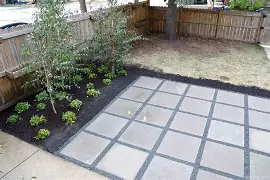
For most homeowners, pavers are one of the strongest all-around choices. Concrete pavers come in many styles, colors, and shapes, which makes them easy to match with brick homes, colonial architecture, and newer suburban properties throughout Alexandria, Reston, and Burke. They are also practical because individual pavers can be replaced if one gets damaged. That is a major advantage in a climate with freeze-thaw stress. When installed over a properly prepared base, pavers can last for decades and handle seasonal movement better than a rigid slab. They are especially useful for patios that need curves, borders, or integrated seating areas.
Natural stone is another excellent option, especially for homeowners who want a more upscale or timeless look. Materials like bluestone, flagstone, and travertine can create a high-end outdoor living space that feels custom and permanent. Bluestone is especially popular in this region because it performs well and pairs beautifully with traditional homes. The tradeoff is cost. Natural stone usually costs more in both material and labor, and the installation must be done carefully to avoid uneven surfaces or water-related problems. For homeowners planning a patio that will be a major focal point of the backyard, natural stone can be worth the investment, especially when paired with retaining walls, outdoor steps, or a larger landscape redesign.
Concrete patios are often the most budget-friendly option upfront, but they need to be evaluated carefully in Northern Virginia. A plain poured slab can work well if the site is properly graded and the slab is reinforced and installed with control joints. However, concrete is more vulnerable to cracking and surface wear if the base is poor or the yard has drainage issues. For homeowners who want a simple, functional patio and are comfortable with a more utilitarian look, concrete can be a reasonable choice. Decorative finishes, such as stamped or stained concrete, can improve appearance, but they also add cost and may require more maintenance over time. In this region, concrete tends to make the most sense when the site conditions are straightforward and the homeowner wants a lower initial investment.
Gravel and loose stone are sometimes used for informal seating areas, but they are usually not the best choice for a long-term primary patio in Northern Virginia. They can shift, spread, and become muddy in wet weather. For homeowners who want a low-cost temporary solution, gravel may be acceptable, but it is rarely the best answer for a polished outdoor living space. If your goal is to increase property value and create a durable entertaining area, pavers or natural stone usually offer a better return.
How Alexandria, Reston, and Burke Weather Affects Patio Performance
Alexandria homeowners often deal with older lots, tighter setbacks, and drainage challenges that come with established neighborhoods. Many properties have mature trees, shaded backyards, and limited grading flexibility. That means patio materials need to handle moisture well and installation plans must account for runoff from nearby structures, downspouts, and neighboring lots. In these settings, pavers and natural stone often perform best because they can be installed with drainage in mind and adjusted more easily if the site needs future repairs. A patio in Alexandria also needs to complement the home’s style, since many buyers care about curb appeal and outdoor living value.
Reston properties often present a different challenge. Some lots are sloped, wooded, or located near streams and drainage corridors. Homeowners may notice water pooling after storms or soft ground in certain areas of the yard. In those cases, the patio material is only part of the solution. The project may also require grading, drainage improvements, or a retaining wall to create a stable usable space. Pavers are often a strong fit because they work well with complex site conditions and can be integrated into a larger landscape plan. If the yard has a significant slope, a patio project may need to be designed alongside retaining structures to prevent erosion and keep the outdoor space level and safe.
Burke homeowners frequently face clay-heavy soil and seasonal expansion that can cause movement beneath patios if the base is not built correctly. This is where the difference between a professional installation and a quick fix becomes obvious. Materials that rely on flexibility, such as pavers, often hold up better than rigid surfaces when the soil shifts. That does not mean concrete cannot work in Burke, but it does mean the site prep has to be excellent. If a homeowner is planning a patio near a lawn installation or existing landscape beds, the drainage plan should also protect the grass and planting areas from runoff. Otherwise, the patio may solve one problem while creating another.
Across all three areas, the weather pattern is the same in one important way: moisture is the enemy of poor construction. The best patio materials Northern Virginia homeowners can choose are the ones that work with the climate, not against it. That is why a local contractor who understands site grading, soil conditions, and seasonal weather patterns can make a major difference in the final result.
Cost Considerations: Material Price, Labor, and Site Conditions
Patio pricing in Northern Virginia can vary widely depending on the material, size, and complexity of the site. A smaller concrete patio may be more affordable upfront, while a larger paver or natural stone patio can move into a much higher investment range quickly. For many homeowners, the biggest surprise is that labor and site preparation often cost as much as, or more than, the material itself. Excavation, base preparation, drainage correction, hauling away old materials, and grading can all affect the final price. If the yard is sloped, wet, or difficult to access, the project may require additional equipment and labor.
Material choice also affects long-term value. A lower-cost patio that cracks, settles, or drains poorly may need repairs within a few years, which can erase any upfront savings. By contrast, a well-built paver patio or natural stone patio may cost more initially but last much longer and require fewer major repairs. Homeowners planning to stay in their home for several years often find that investing in a better system makes more sense than choosing the cheapest option. This is especially true if the patio will be part of a larger outdoor living project that includes retaining walls, steps, lighting, or lawn installation.
Another cost factor is design complexity. Straight rectangular patios are usually less expensive than curved layouts, multi-level spaces, or patios that connect to walkways and seating walls. Custom borders, inlays, and mixed materials can create a beautiful finished look, but they also increase labor time. If you are comparing estimates, make sure each contractor is pricing the same scope of work. One quote may include drainage improvements and a deeper base, while another may not. For homeowners in Alexandria, Reston, and Burke, the smartest pricing conversation is not just “What does it cost?” but “What is included, and how will it hold up in this climate?”
If your project budget is around the $3,000 to $10,000+ range, it is worth discussing whether the patio should be paired with drainage work or a retaining wall. Those improvements can protect the investment and prevent future problems. In many cases, the right sequence is to solve grading and water issues first, then build the patio on a stable foundation. That approach can save money over time and improve the usability of the entire yard.
How to Choose the Right Patio Material for Your Home
The best way to choose a patio material is to start with how you want to use the space. If you want a family gathering area that will see a lot of traffic, pavers are often the safest and most versatile choice. If you want a high-end outdoor entertaining space that adds visual impact, natural stone may be the better fit. If you need a simpler, more budget-conscious solution and your site is relatively flat and dry, concrete may be appropriate. The key is matching the material to the yard conditions, the home style, and the way you plan to live outdoors.
Homeowners should also think about maintenance. Pavers may need occasional joint sand replenishment and sealing depending on the product and finish. Natural stone may require cleaning and periodic care to maintain its appearance. Concrete can be easier to clean but may show cracks or stains more visibly over time. If you do not want to spend weekends maintaining the patio, that should influence your decision. A material that looks great but creates ongoing frustration is not the right long-term choice for most families.
It also helps to consider future plans for the yard. If you think you may add a retaining wall, outdoor kitchen, fire pit, or expanded lawn installation later, choose a patio design that can support those upgrades. A well-planned patio should feel like part of the whole landscape, not a standalone slab dropped into the yard. That is especially important in Northern Virginia, where many homeowners want to maximize outdoor living space without wasting square footage. A professional design can help you think through traffic flow, seating, drainage, and visual balance before construction begins.
In many cases, the right answer is not choosing the cheapest material or the most expensive one. It is choosing the one that fits your property and your goals. That is why local experience matters. A contractor who understands Alexandria’s older lots, Reston’s slopes, and Burke’s soil conditions can recommend a solution that looks good now and performs well later.
Homeowner Decision Checklist
- Do you have drainage issues, standing water, or runoff near the patio area?
- Is your yard flat, sloped, shaded, or affected by clay-heavy soil?
- Do you want a low-maintenance patio or are you comfortable with periodic upkeep?
- Will the patio connect to a retaining wall, steps, walkway, or lawn installation?
- Are you planning to stay in the home long enough to benefit from a higher-end material?
- Do you want a simple functional space or a custom outdoor living area?
- Have you compared quotes that include excavation, base prep, and drainage work?
- Does the contractor have experience with Northern Virginia weather and site conditions?
Why Choose Image Works Landscaping
Image Works Landscaping helps Northern Virginia homeowners build patios that are designed for real-world conditions, not just showroom appeal. Our team understands how local weather, soil, and drainage issues affect long-term performance, and we build each project with that in mind. Whether you are in Alexandria, Reston, Burke, Fairfax, Vienna, Springfield, or one of the surrounding communities, we focus on creating patios that fit your property and your goals.
We also understand that many patio projects are part of a bigger plan. A new patio may need drainage improvements, a retaining wall, grading corrections, or a lawn installation to finish the space properly. Instead of treating those as separate problems, we look at the whole yard so the final result works together. That approach helps protect your investment and gives you a more usable outdoor space from the start. Homeowners often come to us after realizing that a patio is not just a surface project. It is part of the way the entire backyard functions.
For homeowners considering a project of $3,000 or more, choosing the right contractor is just as important as choosing the right material. You want a team that communicates clearly, understands local conditions, and builds with durability in mind. Image Works Landscaping is trusted by homeowners throughout Northern Virginia because we combine design, construction, and practical problem-solving in one process. If you want a patio that looks great and holds up to the region’s weather, we are ready to help.
Final Thoughts: The Best Patio Materials Northern Virginia Homeowners Can Rely On
When it comes to the best patio materials Northern Virginia homeowners can choose, the answer depends on your property, your budget, and how you plan to use the space. In most cases, pavers offer the best balance of durability, flexibility, and design options. Natural stone delivers a premium look and strong long-term value. Concrete can work well in the right setting, especially when the site is simple and the budget is a major concern. What matters most is choosing a material that fits the climate and installing it correctly from the ground up.
If you are in Alexandria, Reston, Burke, or anywhere in Northern Virginia, now is the right time to evaluate your yard before small drainage or grading problems turn into bigger ones. A well-built patio can transform the way you use your home, increase outdoor living space, and add lasting value. If you are ready to compare options, Image Works Landscaping can help you plan a patio that is built for this region and designed for your home. Contact us to discuss your project, review material options, and get a professional recommendation tailored to your property.
For homeowners searching for the best patio materials Northern Virginia has to offer, the smartest move is to start with a local expert who understands the weather, the soil, and the long-term goals of your outdoor space. The right patio can make your backyard more beautiful, more usable, and far easier to enjoy for years to come.
Frequently Asked Questions
What is the most durable patio material for Northern Virginia weather?
Pavers and natural stone are usually the most durable choices because they handle freeze-thaw cycles and soil movement better than many rigid surfaces. The final result still depends heavily on proper base preparation and drainage.
Are paver patios worth the extra cost?
For many homeowners, yes, because pavers are repairable, attractive, and well-suited to Northern Virginia conditions. They often provide better long-term value than cheaper options that may crack or settle sooner.
How much does a new patio usually cost in Northern Virginia?
Costs vary based on size, material, site access, grading, and drainage needs, but many projects start in the several-thousand-dollar range. Larger or more complex patios with retaining walls or drainage work can cost significantly more.
Do I need drainage work before building a patio?
If your yard has standing water, runoff, or slope issues, drainage improvements are often necessary before or during patio construction. Skipping this step can lead to long-term problems even if the patio material itself is high quality.
Is concrete a good choice for patios in Alexandria, Reston, and Burke?
Concrete can work well in some situations, especially on flatter, drier sites with good preparation. However, it is less forgiving than pavers when soil movement or drainage problems are present.
When should I hire a professional instead of doing the patio myself?
If the project involves grading, drainage, retaining walls, or a significant investment, hiring a professional is usually the safer choice. A properly built patio protects your budget and reduces the risk of costly repairs later.