

Quick Answer: The best yard drainage solutions in Northern Virginia depend on where the water is coming from, how your yard slopes, and whether the problem is surface runoff, standing water, or water pushing against your foundation. For many homeowners in Alexandria, Springfield, and Annandale, the most effective fixes are a combination of grading, French drains, dry wells, downspout extensions, retaining walls, and patio drainage improvements.
If your yard stays soggy after every storm, you are not alone. In neighborhoods across Alexandria, Springfield, and Annandale, heavy clay soil, older lot grading, and dense residential development often create drainage problems that do not go away on their own. What starts as a muddy lawn or a few puddles can quickly turn into dead grass, mosquito breeding areas, foundation concerns, basement moisture, and expensive landscape damage. That is why homeowners searching for yard drainage solutions northern virginia need more than a quick fix. They need a plan that addresses how water moves across the property, where it collects, and how to redirect it safely. The right drainage system can protect your home, improve curb appeal, and make your outdoor space usable again. For many properties, drainage work is also the first step before installing a patio, retaining wall, or new lawn, because those improvements only perform well when the ground underneath is properly managed.
Why Wet Yards Are So Common in Alexandria, Springfield, and Annandale
Wet yards are especially common in this part of Northern Virginia because many homes sit on compacted clay-heavy soil that drains slowly. After a heavy rain, water often has nowhere to go, so it lingers on the surface or follows the path of least resistance toward low spots, foundations, or neighboring properties. In older communities like Alexandria and Annandale, original grading may have changed over time as homeowners added patios, sheds, fences, additions, or landscaping beds. Even a small change in slope can redirect water into an area that used to stay dry.
Another reason drainage problems show up so often here is the mix of lot sizes and terrain. Some homes in Springfield and surrounding neighborhoods have gentle slopes that seem manageable until runoff from the roof, driveway, and neighboring yards all converges in one place. Others have flat backyards where water simply sits after storms. If your lawn stays squishy for days, or if you see water pooling near a basement wall, the issue is usually not just the rain itself. It is the way the property handles water. That is why effective yard drainage solutions northern virginia homeowners can trust must be tailored to the site, not copied from a generic online fix.
Homeowners often notice the problem first in the lawn, but the real damage can be bigger than muddy shoes. Constant moisture can kill turf, weaken plant roots, attract pests, and make it difficult to mow or enjoy the yard. In more serious cases, water can seep toward foundations, crawl spaces, or basement windows. If you are planning a patio, retaining wall, or lawn installation, drainage should be part of the design from the beginning so you do not pay twice to correct a problem later.
Best Yard Drainage Solutions Northern Virginia Homeowners Should Consider
The best drainage solution is the one that solves the actual source of the water problem. In many Northern Virginia yards, that means combining several methods instead of relying on one. Grading is often the first step. If the soil slopes toward your home or toward a low point in the yard, regrading can help move water away from trouble areas. This is especially important near foundations, patios, and retaining walls, where poor drainage can cause long-term structural issues. Regrading is often paired with new topsoil and lawn installation so the finished surface looks natural and functions properly.
French drains are another common solution for homes in Alexandria, Springfield, and Annandale. These systems collect water underground and move it away from wet areas through a perforated pipe surrounded by gravel. They are useful when water collects in a specific section of the yard or when runoff needs to be intercepted before it reaches a home or patio. Dry wells can also help by giving excess water a place to disperse underground. Downspout extensions are a simple but important fix because roof runoff often contributes more water than homeowners realize. If gutters empty too close to the house, even a well-graded yard can become saturated during heavy rain.
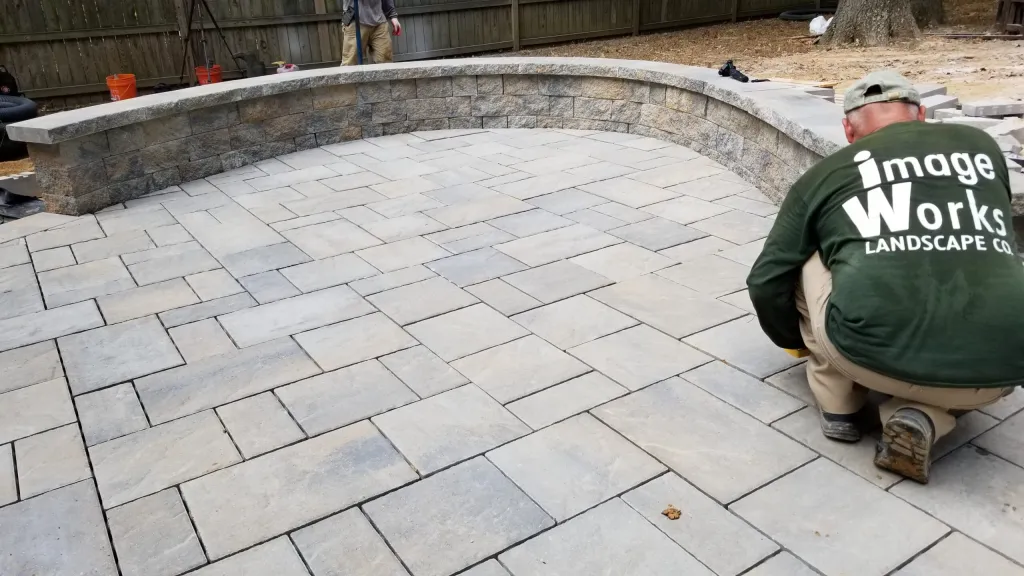
For properties with elevation changes, retaining walls can play a major role in drainage control. A properly built retaining wall can hold back soil, create level usable space, and include drainage features that relieve pressure behind the wall. This matters on sloped lots where water naturally pushes downhill and erodes landscaping. Patio drainage is also worth considering if your outdoor living area collects water after storms. A patio that is installed without proper slope or drainage channels can become slippery, stained, or damaged over time. In many cases, the smartest approach is a full-site solution that combines drainage, hardscaping, and planting so the yard works as a system instead of a patchwork of temporary fixes.
How to Choose the Right Drainage Fix for Your Property
Choosing the right drainage solution starts with understanding where the water is coming from and how it behaves during and after rainfall. A puddle in the middle of the lawn may call for grading or a French drain, while water near the foundation may require downspout management, soil correction, and possibly a drainage channel. If the problem appears only after long storms, the issue may be soil saturation. If it happens after every moderate rain, the site may have a structural slope problem. Homeowners often try to solve drainage issues by adding more mulch or filling a low spot, but those fixes usually only hide the symptom for a short time.
It also helps to think about the long-term use of the yard. If you want to add a patio, fire pit, outdoor kitchen, or retaining wall, drainage should be designed around that plan. For example, a homeowner in Fairfax or Reston may want to turn a sloped, muddy backyard into a usable entertaining space. In that case, a retaining wall may create the level area needed for a patio, while a French drain or swale handles the runoff behind it. If the goal is to restore a lawn, the solution may be more focused on regrading, soil improvement, and lawn installation with drainage-friendly turf preparation. The best choice is not always the cheapest one upfront. It is the one that prevents repeat problems and protects the larger investment.
There is also a timing question. Some drainage issues are urgent, especially if water is entering the basement, undermining a patio, or causing erosion near a foundation. Other problems can be monitored for a short period if they only appear during extreme weather. But if the yard stays wet for days, smells musty, or has visible erosion channels, delaying the project usually makes it more expensive. Soil loss, root damage, and foundation exposure tend to get worse over time. A professional site evaluation can help you decide whether the issue needs immediate correction or whether it can be addressed as part of a larger landscape project later in the season.
Cost Considerations for Drainage Projects in Northern Virginia
Drainage project costs vary widely because every yard has different conditions. A simple downspout extension or minor grading adjustment may be relatively affordable, while a full drainage system with excavation, pipe installation, regrading, and restoration will cost more. In Northern Virginia, labor is often a major part of the budget because access can be tight, soil can be difficult to work with, and many properties require careful coordination around existing landscaping, patios, fences, and utility lines. The more complex the site, the more time and equipment are needed.
Materials also affect pricing. French drains require pipe, gravel, filter fabric, and sometimes catch basins or discharge piping. Retaining walls may involve block, stone, drainage stone, geogrid, and proper backfill materials. If the project includes patio drainage, the cost can increase because the installer may need to remove and reset hardscape, adjust slope, or add channel drains. Lawn restoration after drainage work is another factor. Some homeowners are surprised to learn that the excavation is only part of the job; the yard also needs to be repaired afterward so it looks finished and functions properly. If the project includes new lawn installation, sod or seed, soil amendments, and irrigation adjustments may be added to the total.
For many homeowners, drainage projects start around a few thousand dollars and can increase significantly when the work includes retaining walls, patios, or major grading changes. That is why these projects often become $3,000+ investments. While that may seem like a lot, it is usually less expensive than repeatedly repairing dead grass, replacing washed-out mulch, fixing patio settling, or dealing with moisture-related home damage. The best way to control cost is to get a site-specific plan that addresses the root cause instead of paying for temporary fixes that do not last.
Local Northern Virginia Considerations That Affect Drainage Performance
Drainage in Northern Virginia is not just about rain. It is about the local conditions that shape how water behaves on a property. In Alexandria, older neighborhoods often have mature trees, compacted soil, and limited yard access, which can make drainage work more delicate and labor-intensive. In Springfield and Annandale, many homes have sloped lots, additions, or backyard improvements that changed the original drainage pattern. In both areas, water often moves from one property to another, which means a solution has to respect neighboring grades and existing structures.
Seasonal weather also matters. Heavy spring rain can expose drainage problems that were hidden during drier months. Summer storms can overwhelm undersized downspouts or low-spot drainage. In fall, leaf buildup can clog gutters and make runoff worse, while winter freeze-thaw cycles can worsen erosion and soil movement. Homeowners who wait until a major storm hits often find themselves dealing with standing water, muddy access paths, and damaged landscaping all at once. That is why the best time to evaluate drainage is before the next big weather event, not after it.
Local permitting and property layout can also influence the project scope. Some drainage and retaining wall projects may require attention to setbacks, easements, or discharge direction, especially when water needs to be moved away from a foundation or toward a safe outlet. A knowledgeable Northern Virginia contractor can help you choose a solution that fits the property and avoids creating new problems for you or your neighbors. This local understanding is one reason homeowners searching for yard drainage solutions northern virginia should work with a company that regularly handles residential landscape construction in the area rather than a general handyman approach.
Homeowner Decision Checklist Before You Start a Drainage Project
- Do you see standing water more than 24 hours after rain?
- Is the wet area near your foundation, patio, or retaining wall?
- Has your lawn developed muddy patches, moss, or dead spots?
- Do gutters and downspouts discharge too close to the house?
- Is the yard sloped toward your home or a low point?
- Are you planning a patio, retaining wall, or lawn installation soon?
- Have you already tried temporary fixes that did not last?
- Do you want a solution that improves both function and curb appeal?
If you answered yes to several of these questions, it is probably time to schedule a professional evaluation. Drainage problems rarely improve on their own, and the longer they continue, the more likely they are to affect other parts of the landscape. A proper assessment can help you decide whether the project should be handled now or combined with other improvements for better value.
Why Homeowners Choose Image Works Landscaping
Image Works Landscaping helps homeowners in Alexandria, Springfield, Annandale, and surrounding Northern Virginia communities solve drainage problems with practical, long-lasting landscape solutions. Instead of offering one-size-fits-all fixes, the team looks at the full property: grading, runoff, soil conditions, hardscape layout, and how the yard is actually used. That matters because drainage work is rarely isolated. It often connects to retaining walls, patios, lawn installation, and other outdoor improvements that need to work together.
Homeowners choose Image Works Landscaping because the company understands how to turn problem areas into usable outdoor spaces. If your wet yard needs a retaining wall to control slope, a patio that drains properly, or a lawn restoration plan after excavation, the project can be designed as one coordinated build. That approach helps protect your investment and avoids the frustration of fixing one issue only to create another. For homeowners looking for yard drainage solutions northern virginia, that kind of local expertise makes a real difference in both results and peace of mind.
Conclusion: Fix the Drainage Problem Before It Gets More Expensive
Wet yards are more than an inconvenience. They can damage your lawn, limit how you use your outdoor space, and create bigger problems around patios, retaining walls, and foundations. The best drainage solution depends on your property, but in Alexandria, Springfield, and Annandale, the most effective projects usually involve a combination of grading, French drains, downspout control, retaining walls, and proper restoration. If you are planning a landscape upgrade or dealing with a yard that never seems to dry out, now is the time to act. A well-designed drainage system can protect your home, improve curb appeal, and make your yard usable again. Contact Image Works Landscaping to discuss the right drainage plan for your property and get a solution built for Northern Virginia conditions.