

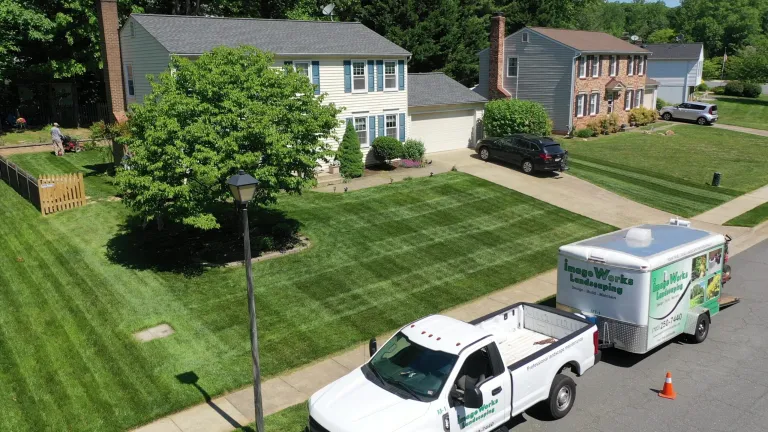
Quick Answer: Fertilizing your lawn in July in Fairfax County can be a good idea in some situations, but it is not always the best move for every yard. If your lawn is newly installed, under stress, or showing clear nutrient deficiencies, the right summer feeding plan may help; however, applying the wrong product at the wrong time can waste money and even damage turf during Northern Virginia heat.
If you are trying to decide whether to fertilize lawn in july northern virginia homeowners should think about grass type, soil condition, watering habits, and whether the lawn is established or newly installed. In many Fairfax County neighborhoods, the better question is not simply “Should I fertilize?” but “What does my lawn actually need right now?”
For homeowners in Fairfax County and surrounding Northern Virginia communities, July is a tricky month. The heat, humidity, and unpredictable rain can make turf look thin, dull, or patchy even when the real issue is compaction, drainage, shallow roots, or poor installation. That is why a summer lawn decision should be based on the condition of the property, not just the calendar. If your yard is part of a larger outdoor project that includes lawn installation, drainage correction, or grading, July may be the right time to evaluate the whole system rather than just spread fertilizer and hope for the best.
In this guide, we will explain when summer fertilization makes sense, when to wait, what it costs, and how Northern Virginia weather and soil conditions affect the decision. We will also cover how homeowners can tell whether their lawn needs a simple feeding or a more complete solution such as new sod, drainage improvements, or a landscape redesign.
When Fertilizing in July Makes Sense for Northern Virginia Lawns
Fertilizing in July is not automatically a bad idea. In fact, there are several situations where a carefully planned summer application can support turf health, especially in Fairfax County where cool-season grasses like tall fescue are common. If your lawn was recently installed, repaired after construction, or seeded within the last season, it may need targeted nutrition to establish stronger roots. The same is true if your property has been under stress from foot traffic, heat, or inconsistent watering. In those cases, the goal is not to push fast top growth, but to help the lawn recover and stay resilient through summer.
Homeowners often notice that their grass starts to fade in July and assume fertilizer is the answer. Sometimes it is, but often the real issue is that the lawn is struggling because of poor soil structure or drainage. In neighborhoods across Arlington, Alexandria, Fairfax, and Vienna, we see lawns that look thin because water is pooling in low spots or because the soil was compacted during construction. A fertilizer application may improve color for a short time, but it will not fix the underlying problem. If the lawn is healthy overall and just needs a light nutritional boost, a professional can recommend the right product and timing so you do not burn the turf or encourage weak growth during peak heat.
Another situation where July fertilization can make sense is when the lawn is part of a larger renovation plan. For example, if a homeowner is investing in lawn installation, a retaining wall, or drainage correction, the fertilizer strategy should be coordinated with the project timeline. A newly graded yard in Fairfax Station or Clifton may need soil amendments and starter nutrition before sod goes down. In that case, July can be a practical month for installation and early establishment work, especially if the property has irrigation and the soil conditions are managed correctly. The key is to treat fertilization as one piece of a larger landscape system, not a standalone fix.
When You Should Avoid Fertilizing in July
There are also plenty of times when fertilizing in July is not the best choice. If your lawn is already stressed from drought, disease, insect activity, or poor drainage, adding fertilizer can make the problem worse. In hot weather, turf that is struggling to survive may not be able to use the nutrients effectively. Instead of building stronger roots, the lawn may push tender top growth that dries out quickly or becomes more vulnerable to fungus. That is why many Northern Virginia lawn professionals recommend caution during the hottest part of the summer, especially for lawns that have not been properly installed or maintained.
Homeowners in places like Springfield, Burke, and Reston often ask whether a quick fertilizer application will bring a tired lawn back to life. The honest answer is that it depends on why the lawn looks tired. If the grass is thin because the soil is compacted, the roots are shallow, or water is running off instead of soaking in, fertilizer alone will not solve the issue. In those cases, the better investment may be aeration, drainage improvements, overseeding, or full lawn installation. Spending money on fertilizer when the lawn cannot absorb it is usually a short-term fix that leads to more frustration later.
You should also avoid fertilizing if your lawn has just been seeded or sodded and the installation plan does not call for it yet. New turf needs the right starter nutrients, but too much fertilizer too soon can stress young roots. This is especially important for homeowners in communities with clay-heavy or mixed soils, where water retention and nutrient movement can be unpredictable. If your lawn installation was done by a professional, ask for a maintenance schedule that reflects the actual site conditions. That schedule should account for sun exposure, slope, irrigation, and the time of year. A good plan helps you avoid wasting money on products that do not match the lawn’s stage of growth.
What Fairfax County Homeowners Should Consider Before Applying Fertilizer
Before deciding to fertilize lawn in july northern virginia homeowners should look beyond the bag of fertilizer and evaluate the property as a whole. Start with the grass type. Most lawns in Fairfax County are cool-season grasses, which generally prefer stronger feeding in spring and fall rather than during peak summer heat. If your lawn is tall fescue, it may survive July just fine with proper watering and minimal stress, but it may not need a heavy feeding unless a professional sees a specific reason. If your lawn is a newer installation, the recommendation may be different because the root system is still developing.
Next, think about water. Fertilizer only helps when the lawn can actually use it. If your irrigation system is uneven, your hose watering is inconsistent, or your yard has hot, dry slopes, the fertilizer may not deliver the results you expect. In areas like Herndon, Sterling, and Woodbridge, we often see properties where one side of the yard is thriving and another side is struggling because of shade, runoff, or sprinkler coverage issues. A homeowner may spend money on fertilizer and still end up with patchy results simply because the lawn is not receiving water evenly. In those cases, it is smarter to correct the watering pattern first and then fertilize if the lawn truly needs it.
Soil condition matters too. Many Northern Virginia properties have compacted soil, especially where homes were built on disturbed ground or where heavy use has worn down the turf. If the soil is tight, roots cannot spread well and fertilizer efficiency drops. This is why some homeowners end up needing more than a feeding. A lawn that repeatedly fails in July may need grading, drainage work, or a fresh lawn installation with better soil preparation. That is also where higher-value landscape improvements often come into play. A properly built lawn, paired with a retaining wall to manage slope or a drainage system to move water away from low spots, can solve recurring summer problems far more effectively than repeated fertilizer applications.
Cost Considerations: Fertilizer vs. Lawn Repair or Installation
One reason homeowners hesitate in July is cost, and that is understandable. Fertilizer itself may seem inexpensive, but the real question is whether it is the most cost-effective solution for your yard. A basic DIY fertilizer purchase may cost relatively little, but if the lawn is not in a condition to respond well, that money can be wasted. Professional fertilization services cost more upfront, but they can be more efficient because the product, timing, and application rate are matched to the lawn’s needs. That matters in Fairfax County, where one property may need a light summer treatment and another may need a full renovation plan.
If your lawn has recurring bare spots, drainage issues, or poor establishment, the more meaningful investment may be lawn installation rather than repeated patchwork repairs. New lawn installation, especially when paired with grading, soil preparation, or drainage correction, is a higher-cost project, but it can deliver a better long-term result. For many homeowners, projects in the $3,000+ range are where the real value starts to show up. That budget can support more than just grass; it can include site prep, sod or seeding, drainage improvements, and sometimes retaining walls or patio transitions that improve the entire outdoor space. In neighborhoods like Annandale, Oakton, and Falls Church, these upgrades can make a major difference in both curb appeal and usability.
Labor also affects pricing. A simple fertilizer application is one thing, but evaluating a stressed lawn, testing the soil, checking irrigation, and determining whether the problem is nutrient-related or structural takes expertise. If the lawn needs drainage correction or regrading before installation, the cost rises because the job becomes more complex. That is why homeowners should compare the cost of short-term fixes against the cost of a more permanent solution. In many cases, spending a little more now on the right landscape work saves money over time by reducing repeat treatments, patch repairs, and wasted materials.
Local Northern Virginia Conditions That Change the Decision
Northern Virginia is not a one-size-fits-all lawn market. Fairfax County and the surrounding communities have a mix of mature neighborhoods, newer developments, shaded lots, clay-heavy soils, and sloped properties that all behave differently in summer. In places like Alexandria and Arlington, smaller yards may be shaded by trees or surrounded by hardscape, which changes how heat and moisture affect the turf. In suburban areas like Fairfax Station, Clifton, and Lorton, larger lots may have drainage challenges, uneven grading, or runoff issues that make July lawn care more complicated. A fertilizer plan that works on one property may be the wrong move on another just a few miles away.
Weather patterns also matter. July in Northern Virginia can bring intense heat, sudden storms, and long stretches of humidity. That combination can stress turf and create disease pressure. A lawn that looks pale may actually be dealing with fungus, root stress, or compaction rather than a simple nutrient shortage. This is why local experience matters so much. A professional who works in Fairfax, Vienna, Reston, and Herndon understands how quickly conditions can change from one week to the next and how those changes affect lawn installation and maintenance decisions. The right recommendation should reflect your property’s microclimate, not a generic summer calendar.
For homeowners planning larger outdoor projects, July can be a smart time to assess the whole property. If your lawn has poor drainage, a retaining wall may help manage slope and runoff. If you are adding a patio, the surrounding lawn may need regrading or new sod to create a clean transition. If the yard has failed repeatedly, a full lawn installation may be more practical than continuing to fertilize a lawn that never had the right foundation. Northern Virginia homeowners often get the best results when they treat the lawn as part of the landscape system, not as an isolated patch of grass.
Homeowner Decision Checklist
- Is your lawn newly installed, or has it been struggling since the last renovation?
- Are the brown spots caused by heat stress, poor drainage, compaction, or disease?
- Do you have consistent irrigation coverage across the entire yard?
- Has the soil been tested or evaluated recently?
- Would fertilizer help, or would aeration, drainage work, or lawn installation be a better investment?
- Are you planning a larger project such as a patio, retaining wall, or grading improvement?
- Do you want a short-term color boost, or are you trying to solve a recurring lawn problem?
- Would delaying fertilizer until fall save money and produce better results?
Why Choose Image Works Landscaping
Image Works Landscaping helps Northern Virginia homeowners make smarter decisions about their lawns, not just faster ones. If you are trying to figure out whether to fertilize lawn in july northern virginia conditions, our team looks at the full picture: soil, slope, drainage, turf condition, and how the lawn fits into the rest of your property. That matters because a healthy lawn is rarely the result of one product. It is usually the result of good planning, proper installation, and the right long-term maintenance strategy.
We focus on high-value residential projects that solve real problems, including lawn installation, drainage improvements, retaining walls, and patios. That means we are not just thinking about how your yard looks this week. We are thinking about how it will perform next summer, after heavy rain, and after years of use. Homeowners in Annandale, Arlington, Alexandria, Fairfax, Vienna, Reston, Herndon, Sterling, Woodbridge, and surrounding communities trust us because we bring practical recommendations and quality workmanship to every project. If your lawn needs more than fertilizer, we can help you understand the next best step and build a plan that makes sense for your budget.
For homeowners considering a larger investment, this is where professional guidance becomes especially valuable. A lawn that keeps failing in July may be telling you that the real issue is underneath the surface. Our team can evaluate whether your property needs new sod, better grading, drainage correction, or a landscape feature that supports the lawn long term. That kind of expertise protects your investment and helps you avoid spending money on temporary fixes that do not hold up in Northern Virginia weather.
Final Thoughts: Should You Fertilize in July?
For some Fairfax County lawns, fertilizing in July can help maintain color and support recovery. For others, it is better to wait, especially if the turf is stressed, the soil is compacted, or drainage problems are limiting root health. The smartest decision is to evaluate the whole property before you spend money on fertilizer. In many cases, the most effective solution is not a quick summer feeding but a more complete landscape plan that includes lawn installation, drainage correction, or structural improvements that help the yard thrive year after year.
If your lawn is thin, patchy, or repeatedly struggling in the heat, now is the time to get a professional opinion. Image Works Landscaping can help you decide whether fertilization is appropriate or whether your property would benefit more from a new lawn installation or a larger outdoor improvement project. If you want a healthier, better-looking yard in Fairfax County and across Northern Virginia, contact our team to discuss the right solution for your home.
Frequently Asked Questions
1. Is July too late to fertilize a lawn in Northern Virginia?
Not always, but it depends on the condition of the turf and the type of fertilizer being used. In many cases, July is a better month for evaluation than for heavy feeding, especially if the lawn is already stressed.
2. Will fertilizer fix brown spots in my Fairfax County lawn?
Not necessarily. Brown spots can come from heat stress, poor drainage, compacted soil, insects, or disease, and fertilizer will not solve those problems on its own. A proper inspection is the best way to avoid wasting money.
3. How much does professional lawn fertilization cost compared to lawn installation?
Fertilization is usually much less expensive than lawn installation, but it also delivers a smaller and shorter-term result. If your lawn keeps failing, a larger investment in drainage, grading, or new sod may be more cost-effective over time.
4. Should I fertilize newly installed sod in July?
Sometimes, but only if the installation plan calls for it and the turf is established enough to handle it. New sod needs the right nutrition, but too much fertilizer too soon can stress young roots.
5. What if my lawn looks thin because of drainage problems?
Fertilizer will not fix drainage issues, and repeated applications can become a waste of money. In that case, a contractor may recommend grading, drainage improvements, or a new lawn installation.
6. Why hire Image Works Landscaping instead of trying a DIY approach?
Because the right answer is often more than a product choice. We help homeowners in Northern Virginia determine whether fertilization, lawn installation, retaining walls, or drainage work will actually solve the problem and protect their investment.