

Quick Answer: The best drainage solutions for wet yards in Annandale and Springfield, VA usually combine surface grading, French drains, downspout extensions, and sometimes retaining walls or dry creek beds. If your yard stays soggy after rain, the right fix depends on where water is pooling, how your soil drains, and whether runoff is coming from your roof, neighboring properties, or a low spot in the yard.
If you are dealing with a wet yard in Northern Virginia, you already know how frustrating it can be. One heavy storm can leave standing water for days, muddy patches where grass will not grow, and soggy areas that make your backyard hard to use. For homeowners searching for drainage solutions wet yard Annandale VA, the challenge is usually not just the water itself, but figuring out why it keeps happening and what solution will actually last. In Annandale and Springfield, many properties sit on clay-heavy soil, sloped lots, or older grading patterns that send water toward the house instead of away from it. Add in seasonal rain, mature trees, and neighborhood runoff, and a simple puddle can turn into a recurring property problem. The good news is that there are proven drainage solutions that can protect your lawn, improve your outdoor living space, and help prevent costly damage to patios, foundations, and landscaping investments.
Why Wet Yards Are So Common in Annandale and Springfield
Wet yards are especially common in Annandale and Springfield because many local properties were built on land that does not naturally drain quickly. Northern Virginia soil often contains a high amount of clay, which holds water instead of letting it move through the ground. That means even a moderate storm can saturate the soil fast, especially in shaded areas where evaporation is slower. If your yard has a low point, compacted soil from years of foot traffic, or a slope that directs water toward the house, you may see standing water long after the rain stops. In older neighborhoods, drainage systems may also be outdated or nonexistent, leaving homeowners to deal with runoff that was never properly managed in the first place.
Another major issue is roof and hardscape runoff. A home with short downspouts, clogged gutters, or a patio that slopes the wrong way can dump a surprising amount of water into one section of the yard. In some cases, the problem is not the lawn at all, but water coming from a driveway, walkway, or neighboring property. Homeowners often notice the first signs in the form of muddy grass, moss growth, sinking mulch beds, or water collecting near basement walls. These are warning signs that should not be ignored. If left untreated, poor drainage can damage turf, kill shrubs, erode soil, and create conditions that are expensive to fix later. That is why identifying the source of the water is the first step before choosing any drainage solution.
Best Drainage Solutions for a Wet Yard in Annandale VA
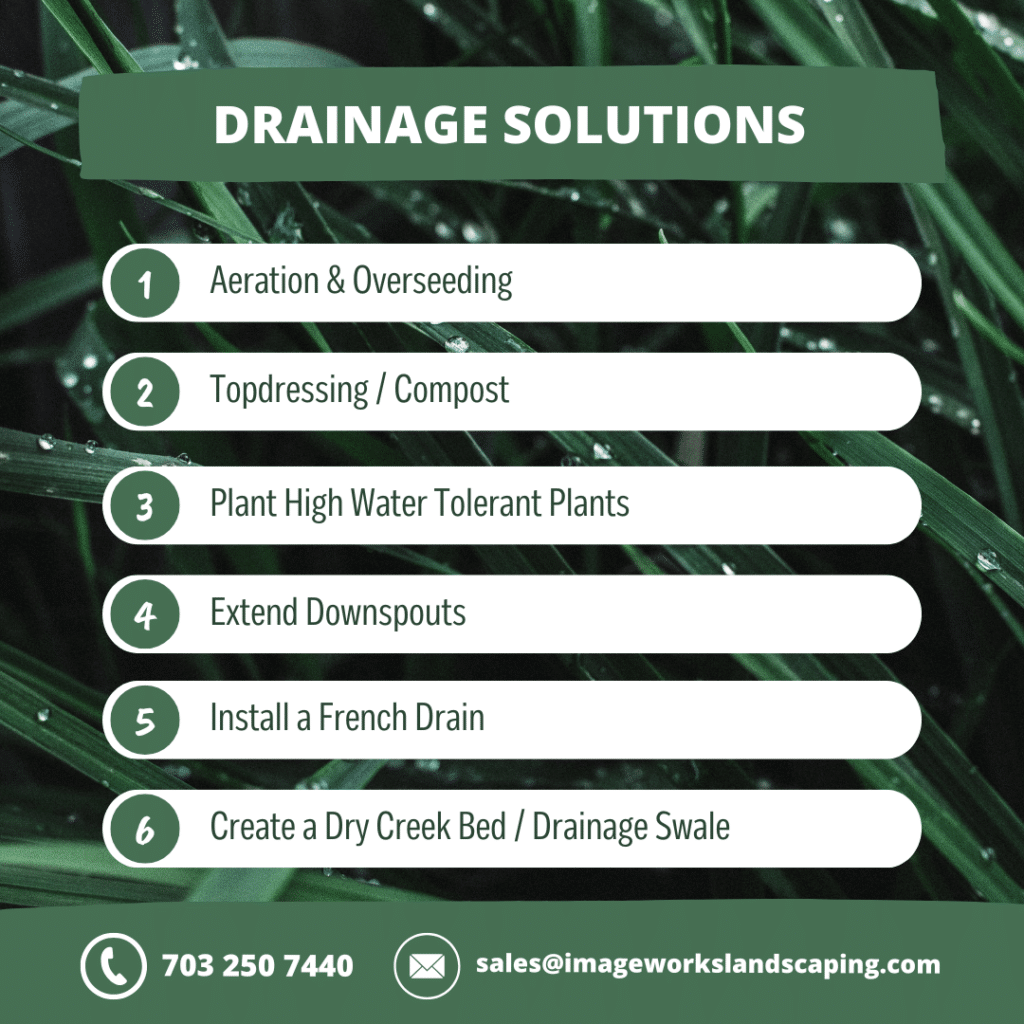
When homeowners search for drainage solutions wet yard Annandale VA, the best answer is rarely one single product. Most successful projects use a combination of grading, drainage piping, and water redirection to move water away from problem areas. One of the most effective options is regrading the yard so water naturally flows away from the home and toward a safe discharge point. This can make a dramatic difference in areas where the yard has settled over time or where the original slope was not designed correctly. Regrading is often paired with fresh topsoil and lawn installation so the yard not only drains better but also looks finished and healthy.
French drains are another highly effective solution for persistent wet spots. A French drain uses a perforated pipe set in gravel to collect excess water underground and move it away from the saturated area. This is especially useful for side yards, back corners, and areas where water tends to pool after every storm. For many Annandale homeowners, French drains are a smart investment because they solve a recurring problem without requiring major changes to the entire landscape. Downspout extensions are also important because they carry roof water farther away from the foundation and reduce the amount of water entering the yard in the first place. In some cases, a dry creek bed can be both functional and attractive, especially if the yard needs a visible path for runoff. When designed correctly, these systems can protect the property while improving curb appeal and outdoor usability.
How to Choose the Right Drainage Fix for Your Property
The right drainage solution depends on how severe the problem is, where the water is coming from, and what the rest of your landscape looks like. If you only see water near one downspout, a simple extension or splash block may be enough. If the entire backyard stays wet for days, you may need a larger system that includes grading, underground piping, and possibly a catch basin. Homeowners with sloped lots often need a different approach than those with flat yards. In a sloped yard, the goal is to intercept and redirect runoff before it gathers speed and causes erosion. In a flat yard, the challenge is usually getting water to move at all, which may require more careful excavation and soil correction.
It also helps to think about your long-term plans for the property. If you are planning a patio, retaining wall, or lawn renovation, drainage should be addressed before or during that project, not after. For example, installing a beautiful patio without correcting drainage can lead to standing water around the hardscape edges, shifting pavers, or runoff that washes mulch into the seating area. Likewise, a new lawn installation will struggle if the soil remains saturated. In many cases, homeowners in Springfield and Annandale get the best value by combining drainage work with a larger landscape project. That approach can reduce repeated labor costs, improve the final result, and create a yard that is both functional and attractive. A professional evaluation is often the fastest way to determine whether you need a targeted repair or a more complete drainage plan.
Cost Considerations for Drainage Projects in Northern Virginia
Drainage costs can vary widely because every property has different soil conditions, access challenges, and project goals. A small downspout extension or minor grading correction may be relatively affordable, while a full drainage system with French drains, catch basins, and regrading can become a more substantial investment. In Northern Virginia, labor costs are often influenced by excavation difficulty, equipment access, and the amount of material that must be moved. If your yard has tight side access, mature trees, existing hardscape, or utility conflicts, the project may require more time and specialized planning. That is why two homes with the same water issue can have very different price ranges.
For homeowners, it is helpful to think beyond the initial quote and consider the cost of doing nothing. Repeated water damage can destroy turf, undermine patios, stain siding, and create foundation concerns that are much more expensive than a drainage fix. A wet yard can also limit how you use your outdoor space, which affects the value of your landscaping investment. Many drainage projects in this area are paired with higher-value improvements such as retaining walls, patio expansions, or lawn installation, which can push the total project above $3,000 and often much higher depending on scope. That is not necessarily a drawback. In fact, combining work can be more efficient because the crew is already on site, the grading is already being adjusted, and the finished landscape can be designed as one cohesive system instead of a series of temporary fixes.
Local Northern Virginia Considerations Homeowners Should Know
Drainage in Northern Virginia is not a one-size-fits-all issue. Annandale, Springfield, Fairfax, and surrounding communities often have older residential lots with mature landscaping, varying slopes, and soil that can shift after heavy rain. In some neighborhoods, water from uphill properties flows into lower yards, creating problems that are not obvious until a storm exposes them. In other areas, tree roots and compacted soil make it difficult for water to soak in naturally. Homeowners in places like Burke, Franconia, Kingstowne, and West Springfield often see similar patterns: a beautiful yard during dry weather that quickly turns muddy and unusable when the rain comes.
Local weather patterns also matter. Northern Virginia gets enough seasonal rain to keep drainage systems working hard, especially during spring storms and summer downpours. Freeze-thaw cycles can worsen grading issues and create small shifts in soil that redirect water over time. That is why a drainage solution should be built with local conditions in mind, not just generic best practices. A properly designed system should account for your lot slope, soil type, roof runoff, nearby hardscape, and where the water can safely discharge. In some cases, the best solution may also involve landscape upgrades such as retaining walls to control slope, patios that are properly pitched, or lawn installation with improved soil preparation. These are the kinds of projects that create lasting value because they solve the problem at the property level instead of masking the symptoms.
When to Repair Now and When You Can Wait
Some drainage problems can wait a short time, but others should be addressed quickly. If you only notice a little pooling after an unusually heavy storm and the water clears within a few hours, you may have time to monitor the area and gather more information. But if water sits for days, the grass turns yellow or dies, or the problem keeps returning in the same spot, it is usually better to act sooner. Standing water near the foundation, basement seepage, or erosion near a patio or retaining wall should be treated as a priority. These are signs that the drainage issue is already affecting the structure or the landscape in a meaningful way.
Homeowners sometimes delay drainage work because they hope the problem will improve on its own. Unfortunately, wet yard issues rarely fix themselves. In fact, they often get worse as soil compacts, grass dies, and runoff carves deeper channels. If you are planning to sell your home, drainage problems can also become a negotiation point during inspection. Even if you are not selling, a yard that stays wet can reduce the enjoyment of your outdoor space and make future landscaping projects more expensive. A good rule of thumb is this: if the problem is recurring, expanding, or affecting your home’s foundation, it is time to bring in a professional. If it is minor and isolated, you may have a little flexibility, but it is still worth getting an expert opinion before the next storm season arrives.
Homeowner Decision Checklist for Wet Yard Drainage
Before you choose a drainage solution, use this checklist to narrow down the problem and decide what kind of help you need:
- Does water pool in the same spot after every rain?
- Are downspouts dumping water too close to the house?
- Does the yard stay muddy for more than 24 to 48 hours?
- Is runoff coming from a neighbor’s property or a higher part of the lot?
- Have you noticed erosion, sinking soil, or exposed roots?
- Is water reaching your patio, walkway, or foundation?
- Do you plan to install a patio, retaining wall, or new lawn soon?
- Has the problem gotten worse over the last year?
If you answered yes to several of these questions, your yard likely needs more than a quick fix. A professional drainage assessment can help determine whether the solution should be a French drain, regrading, a catch basin, or a combination of systems. The earlier you address the issue, the more options you usually have.
Why Choose Image Works Landscaping
Image Works Landscaping helps Northern Virginia homeowners solve drainage problems with practical, long-lasting landscape solutions. We understand the soil, slopes, and stormwater challenges that affect homes in Annandale, Springfield, Fairfax, Alexandria, Arlington, and nearby communities. Our team does more than install drainage components. We look at the entire property so we can recommend a solution that fits your yard, your home, and your long-term plans. That often means combining drainage with patio construction, retaining walls, lawn installation, or other landscape improvements that make the property more functional and attractive.
Homeowners choose Image Works Landscaping because they want a local company that understands both the technical and visual sides of the project. We know that drainage work should not make your yard look unfinished or overly industrial. The goal is to solve the water issue while improving the overall landscape. Whether your project is a targeted fix for a wet side yard or a larger outdoor renovation, we focus on quality workmanship, clear communication, and solutions that make sense for Northern Virginia properties. If you are ready to stop dealing with soggy ground, patchy grass, and recurring runoff problems, our team can help you move forward with confidence.
Conclusion: The Right Drainage Solution Starts with the Right Plan
Wet yard problems are common in Annandale and Springfield, but they do not have to become a permanent part of your property. The most effective drainage solutions wet yard Annandale VA homeowners rely on usually combine smart grading, underground drainage, downspout management, and landscape design that works with the site instead of against it. Whether you are dealing with a small pooling issue or a larger drainage challenge that affects your patio, lawn, or foundation, the key is choosing a solution that addresses the real cause of the water. A well-planned drainage project can protect your home, improve curb appeal, and make your outdoor space usable again.
If your yard stays wet after rain, now is the time to get answers. Image Works Landscaping serves homeowners across Annandale, Springfield, and surrounding Northern Virginia communities with drainage, patios, retaining walls, and lawn installation designed to last. Contact us to discuss your property and find the right drainage solution before the next storm creates a bigger problem.