
Quick Answer: In Northern Virginia, the backyard patio cost northern virginia homeowners can expect in 2026 typically ranges from about $6,500 to $25,000+, depending on size, material, site conditions, drainage needs, and whether the project includes retaining walls, steps, or other hardscape features. Smaller, simpler patios cost less, while larger custom patios with premium pavers, grading, and drainage improvements can move well above that range.
If you are planning a patio this summer, the biggest mistake is comparing only square-foot pricing without considering your yard’s slope, soil, access, and long-term durability. In Northern Virginia, those details matter just as much as the patio surface itself, especially in neighborhoods where drainage, clay soil, and tight lot access can affect labor and materials.
Homeowners in Northern Virginia often start with a simple question: what will a backyard patio really cost, and what should I budget if I want it done right the first time? That is a smart question, because patio pricing is not one-size-fits-all. A project in Annandale with a flat yard and easy access may cost very differently from a patio in Fairfax Station or Clifton where grading, drainage, or retaining walls are needed to make the space usable. The final number depends on more than just pavers or concrete. It depends on how much prep work is required, whether the patio needs to solve a water problem, and how much design detail you want built into the finished space.
For many homeowners, a patio is not just a place to put furniture. It becomes the main gathering area for cookouts, family time, and outdoor living. That is why it is worth understanding the full cost picture before you start comparing estimates. In this guide, we will break down what drives patio pricing in Northern Virginia, what different materials usually cost, when drainage or retaining walls change the budget, and how to decide whether now is the right time to move forward. If you are considering a patio, this is the kind of information that helps you budget confidently and avoid expensive surprises later.
What Does a Backyard Patio Cost in Northern Virginia in 2026?
For most homeowners, the backyard patio cost northern virginia projects fall into a few broad ranges. A smaller, straightforward patio using standard pavers or basic concrete may start around $6,500 to $10,000. A mid-range patio with a more polished layout, better materials, and moderate site preparation often lands between $10,000 and $18,000. Larger or more complex projects that include premium pavers, curved layouts, seating walls, steps, drainage corrections, or retaining walls can easily reach $20,000 to $25,000 or more.
Those ranges are useful, but they are not the whole story. A 250-square-foot patio in a relatively flat yard may cost less than a 180-square-foot patio if the smaller project requires extensive excavation, a drainage fix, or a retaining wall to make the space level. That is why homeowners should think in terms of project scope rather than just size. In Northern Virginia, especially in areas like Arlington, Alexandria, Vienna, and Reston, many properties have mature landscaping, limited access, or sloped backyards that increase labor time and equipment needs. Those conditions can raise costs even when the patio itself is not especially large.
Another factor is how the patio will be used. A simple grilling pad is one thing. A full outdoor living area with room for dining, lounge seating, a fire pit, and pathways to the lawn is another. Homeowners planning to stay in the home for years often choose to invest more upfront because a well-built patio can improve daily living and add real resale appeal. If you are budgeting for a patio in 2026, it is usually smarter to plan for a quality installation that includes proper base preparation and drainage rather than trying to save a little by cutting corners on the parts you cannot see.
What Factors Affect Backyard Patio Cost in Northern Virginia?
The biggest cost driver is usually site preparation. Northern Virginia yards often have clay-heavy soil, uneven grades, or drainage issues that must be corrected before the patio can be installed properly. If the area needs excavation, removal of old concrete, tree root management, or regrading, labor costs rise quickly. In neighborhoods with tighter access, crews may need to move materials by hand or use smaller equipment, which adds time and expense. These are the kinds of details homeowners do not always see in a quote, but they make a major difference in the final price and the long-term performance of the patio.
Material choice also matters. Standard concrete is generally the most budget-friendly option, but many homeowners prefer pavers because they offer a more custom look, better repairability, and stronger curb appeal. Natural stone can create a high-end finish, but it usually costs more in both materials and installation. The shape of the patio matters too. A simple rectangle costs less than a curved design with multiple corners, borders, or inlays. Every extra cut, edge detail, and transition between surfaces adds labor. If you want a patio that feels custom rather than basic, expect the budget to reflect that design complexity.
Finally, think about what the patio needs to solve. If water pools near the house after rain, the project may need drainage improvements before the patio can be installed. If the yard slopes sharply, a retaining wall may be necessary to create a usable space. In many Northern Virginia properties, patio projects are bundled with drainage work, retaining walls, lawn installation, or new steps to connect the patio to the rest of the yard. That is often the right move because it solves multiple problems at once and creates a finished outdoor space instead of just a flat surface. For homeowners, the real question is not just how much a patio costs, but how much it costs to build one that works well in your specific yard.
Patio Material Options and Typical Price Differences
When homeowners compare patio estimates, the material choice often explains a large part of the price difference. Concrete patios are usually the most affordable upfront, and they can be a practical choice for homeowners who want a simple, functional outdoor space. However, concrete may not offer the same design flexibility or long-term visual appeal as pavers or natural stone. In Northern Virginia, where many homeowners care about both appearance and resale value, concrete is often chosen for utility areas or budget-conscious projects rather than as the centerpiece of the backyard.
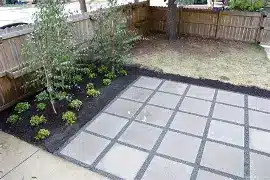
Paver patios are one of the most popular choices because they strike a strong balance between appearance, durability, and value. They come in many colors, shapes, and patterns, which makes it easier to match the style of the home. Pavers also perform well when installed on a proper base, and if one section ever needs repair, individual pieces can often be replaced without tearing out the entire patio. That makes them especially appealing for homeowners who want a long-lasting investment. In many Northern Virginia neighborhoods, pavers are the preferred option for homeowners planning a patio that feels like an extension of the home rather than a simple slab in the yard.
Natural stone usually sits at the higher end of the pricing spectrum. It can create a beautiful, timeless look, but it also tends to require more labor and more careful installation. For homeowners in places like Fairfax Station, Clifton, or Oakton who want a premium outdoor living space, natural stone may be worth the investment. The key is matching the material to your goals. If you want the lowest upfront cost, concrete may make sense. If you want a more polished, durable, and resale-friendly finish, pavers are often the best middle ground. If you want a high-end custom look and are prepared for a larger budget, natural stone can deliver that result. The best choice depends on how you plan to use the space and how long you expect to stay in the home.
Why Drainage, Retaining Walls, and Grading Can Change the Budget
One of the biggest surprises for homeowners is how often a patio project becomes a drainage or grading project too. In Northern Virginia, heavy rain, sloped lots, and dense clay soil can create water problems that show up right where you want the patio to go. If water already collects near the foundation, runs across the yard, or leaves the grass soggy for days, installing a patio without fixing the drainage can lead to future damage. That is why a professional patio estimate should include a close look at slope, runoff, and how water moves through the property.
Retaining walls are another common cost factor. If your backyard drops away from the house or has an uneven grade, a retaining wall may be needed to create a level surface for the patio. This is especially common in communities with hilly terrain or older properties where the backyard was never designed for outdoor living. A retaining wall adds material, engineering, and labor costs, but it also makes the patio safer, more usable, and more attractive. In many cases, homeowners are glad they invested in the wall because it transforms a difficult yard into a usable living space.
Grading work can also affect the budget even when there is no wall involved. A patio should be built on a stable, properly prepared base with the right slope to move water away from the home. If the existing grade is off, the installation team may need to rework the area before the patio goes in. This is one reason estimates can vary so much from one property to another. Two patios with the same square footage can have very different costs if one is a simple install and the other requires drainage corrections, a retaining wall, and new lawn installation around the finished space. For homeowners, the lesson is simple: the cheapest estimate is not always the best value if it ignores the site conditions that protect your investment.
Local Northern Virginia Considerations Homeowners Should Know
Northern Virginia is a great place for outdoor living, but the region creates some unique patio challenges. Many homes in Arlington, Alexandria, Falls Church, and Fairfax sit on smaller lots with limited access, which can increase labor costs because crews have less room to move equipment and materials. In areas like Vienna, Reston, Herndon, and Sterling, larger properties may still have drainage or grading issues because of slope, soil conditions, or mature trees. In more wooded or uneven areas such as Clifton, Lorton, and Fairfax Station, root systems and terrain can make excavation more involved than homeowners expect.
Another local factor is how homeowners use their outdoor spaces. In Northern Virginia, patios often need to do more than just provide a place for chairs. They may connect to a lawn for kids and pets, support a grill or outdoor kitchen, or serve as the main entertaining area for family gatherings. That is why many homeowners choose to combine patio installation with lawn installation, drainage improvements, or retaining walls. When those elements are planned together, the result is more cohesive and often more cost-effective than doing each project separately over time.
Seasonality also matters. July is a busy month for outdoor projects because homeowners want to enjoy their yards during peak summer weather. That can affect scheduling, lead times, and how quickly a project can start. If you are hoping to finish before fall, it is wise to begin planning early and get a site visit before the best installation windows fill up. For homeowners in Northern Virginia, the best patio projects are usually the ones designed around the property’s actual conditions, not just a catalog photo. A local contractor who understands the region’s soil, slope, and drainage patterns can help you avoid costly mistakes and build a patio that lasts.
How to Budget for a Patio Project Without Overspending
The best way to budget for a patio is to start with your real goals. Ask yourself how you want to use the space, how large it needs to be, and whether the patio should solve any existing yard problems. If you only need a small sitting area, you may be able to keep the project modest. If you want a full outdoor living space with seating, steps, and a level area for entertaining, you should budget accordingly. Homeowners often save money by choosing a simpler shape or a standard paver style while still investing in the parts that matter most, such as base preparation and drainage.
It also helps to think in phases. Some homeowners want to complete the patio, retaining wall, and lawn installation all at once. Others may choose to install the patio now and add additional features later. That can be a smart strategy if you want to spread out costs, but only if the initial design is planned carefully. A patio that is built without considering future walls, lighting, or pathways can become harder and more expensive to expand later. A good contractor should help you think ahead so the first phase does not create problems for the next one.
Finally, do not budget based on the lowest quote alone. A patio that is underbuilt can lead to settling, drainage issues, or repairs within a few years. In a market like Northern Virginia, where homeowners expect lasting quality, it usually makes more sense to pay for proper installation than to gamble on a bargain price. If you are comparing estimates, look at what is included: excavation, base material, compaction, drainage, edging, cleanup, and any finishing work around the patio. A clear, detailed estimate is usually a better sign of value than a vague low number. That is especially true for projects over $3,000, where the quality of workmanship has a direct impact on how long the patio will last and how good it will look over time.
Homeowner Decision Checklist
- Do you have standing water, runoff, or soft spots in the area where the patio will go?
- Is your yard level enough for a patio, or will grading or a retaining wall be needed?
- Do you want a basic patio, or are you planning for entertaining, dining, and outdoor living?
- Have you compared material options such as concrete, pavers, and natural stone?
- Do you need lawn installation, steps, or drainage work to finish the space properly?
- Are you planning to stay in the home long enough to benefit from a higher-quality installation?
- Have you received a detailed estimate that explains labor, materials, and site preparation?
Why Choose Image Works Landscaping for Your Northern Virginia Patio
Image Works Landscaping helps Northern Virginia homeowners build patios that look great and perform well in real-world conditions. That matters because a patio is only as good as the base beneath it, the drainage around it, and the way it fits the rest of the yard. Our team understands the local terrain, the common grading challenges in this region, and the importance of creating outdoor spaces that feel finished, functional, and built to last.
We also know that many patio projects are part of a larger landscape plan. If your backyard needs drainage improvements, a retaining wall, or new lawn installation to complete the space, we can help you think through the full project instead of treating each piece separately. That approach often saves homeowners time, reduces rework, and creates a more polished result. Whether you are in Arlington, Alexandria, Fairfax, Vienna, Reston, Herndon, Springfield, Burke, Lorton, or a surrounding Northern Virginia community, our goal is to deliver a patio that fits your property and your budget.
Homeowners choose Image Works Landscaping because they want clear communication, local experience, and a finished product that adds real value to the home. If you are ready to explore your options, we can help you understand what your project may cost, what features make sense for your yard, and how to build a patio that you will enjoy for years.
Final Thoughts: Is Now the Right Time to Build Your Patio?
If you have been wondering about the backyard patio cost northern virginia homeowners should expect in 2026, the most important takeaway is that the right budget depends on your yard, your goals, and the condition of the space you are starting with. A patio can be a relatively modest project or a major backyard transformation, but in either case, the value comes from doing it correctly. That means accounting for drainage, grading, access, and the materials that fit your home and lifestyle.
For many homeowners, summer is the best time to start planning because the weather makes it easier to evaluate the yard and move forward before fall. If your backyard has been holding water, feels too uneven to use, or simply does not match the way you want to live outdoors, now is a good time to get a professional opinion. A well-designed patio can turn an underused yard into one of the best parts of your home.
If you are ready to take the next step, Image Works Landscaping is here to help you plan a patio that fits your property, solves the right problems, and adds lasting value. Contact us today to discuss your backyard patio project in Northern Virginia and get expert guidance on the best path forward.