

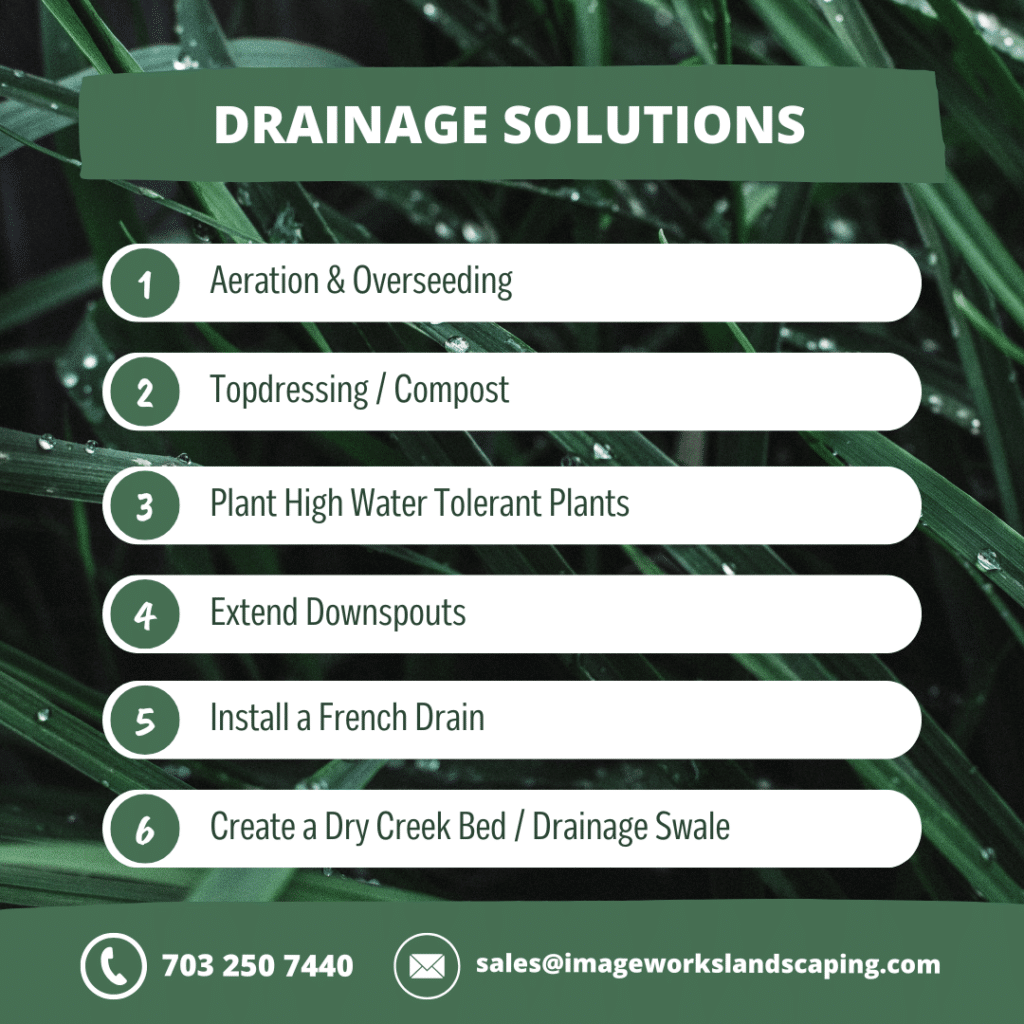
Best Drainage Solutions for a Wet Backyard in Northern Virginia After Summer Storms
After a heavy summer storm, many Northern Virginia homeowners are left with soggy lawn areas, standing water, muddy pathways, and foundation concerns. If your yard stays wet long after the rain stops, the problem is often more than just inconvenience. Poor drainage can damage turf, kill shrubs, attract pests, and create long-term issues around your home.
For homeowners searching for backyard drainage solutions northern virginia, the best approach is to identify the source of the water and choose a drainage system that fits your property, soil type, and slope. In Northern Virginia, clay-heavy soils, compacted ground, and intense summer downpours make drainage problems especially common.
Below, we explain the most effective drainage solutions for a wet backyard, how to tell which option is right for your property, and when to call a professional landscaping contractor for help.
Why Backyards Stay Wet After Summer Storms in Northern Virginia
Summer storms in Northern Virginia can deliver a large amount of water in a short period of time. If your yard cannot absorb or move that water quickly enough, it will collect in low spots and around structures.
Common causes of poor backyard drainage
- Clay soil: Many Northern Virginia properties have soil that drains slowly.
- Compacted ground: Heavy foot traffic, construction, and equipment can reduce infiltration.
- Improper grading: Water may flow toward the house instead of away from it.
- Downspout discharge problems: Roof runoff may empty too close to the foundation.
- Low-lying areas: Natural dips in the yard can trap water after storms.
- Blocked drainage paths: Leaves, debris, and overgrown landscaping can prevent water from moving properly.
If these issues are not addressed, standing water can become a recurring problem throughout the summer and into the wetter seasons.
Top Backyard Drainage Solutions for Northern Virginia Homes
The best drainage solution depends on your yard’s slope, soil conditions, and where water is collecting. In many cases, a combination of solutions works best.
1. Regrading the Yard
Regrading reshapes the surface of the yard so water naturally flows away from your home and toward a proper drainage outlet. This is often one of the most effective long-term fixes for standing water.
Best for: Yards with improper slope or water pooling near the house.
Benefits:
- Improves surface runoff
- Helps prevent foundation moisture issues
- Can eliminate persistent low spots
Regrading is often the first step in a larger drainage plan because it corrects the root cause of the problem.
2. French Drains
A French drain is a gravel-filled trench with a perforated pipe that collects excess water and redirects it away from problem areas. This is a popular option for wet backyards because it works well in areas where water seeps into the soil and lingers.
Best for: Saturated lawns, side yards, and areas with repeated pooling.
Benefits:
- Moves water underground
- Reduces surface puddling
- Can be installed along foundations, fences, or low points
French drains are especially useful in Northern Virginia where clay soil slows natural drainage.
3. Dry Creek Beds
A dry creek bed is both functional and attractive. It uses rock, stone, and carefully designed grading to guide stormwater through the yard. During dry weather, it looks like a decorative landscape feature. During storms, it helps channel runoff safely.
Best for: Sloped properties and visible drainage paths.
Benefits:
- Enhances curb appeal
- Controls erosion
- Directs water away from problem areas
This solution is a strong choice for homeowners who want drainage support without sacrificing landscape design.
4. Catch Basins and Area Drains
Catch basins collect standing water from low spots and move it through buried piping to a better discharge point. They are often installed in areas where water accumulates quickly after storms.
Best for: Sunken lawn areas, patios, driveways, and downspout runoff points.
Benefits:
- Captures water before it spreads
- Works well with pipe systems
- Can handle heavy storm runoff
These systems are especially helpful when water collects in one specific area of the yard.
5. Downspout Extensions and Underground Drainage
Roof runoff can overwhelm a backyard if downspouts release water too close to the house. Extending downspouts or connecting them to underground piping helps move roof water away from the foundation and into a safer drainage area.
Best for: Homes where roof runoff contributes to wet soil near the foundation.
Benefits:
- Reduces foundation moisture risk
- Prevents erosion near the house
- Improves water management across the property
This is often one of the simplest and most cost-effective drainage improvements.
6. Rain Gardens
A rain garden is a planted depression designed to absorb and filter stormwater. It uses native plants that tolerate both wet and dry conditions, helping manage runoff while adding beauty to the landscape.
Best for: Homeowners looking for an eco-friendly drainage solution.
Benefits:
- Supports stormwater absorption
- Improves landscape aesthetics
- Can reduce runoff into nearby drains and hard surfaces
Rain gardens work best when installed in the right location and paired with proper soil preparation.
7. Soil Aeration and Lawn Restoration
In some cases, the issue is not just water flow but compacted soil. Core aeration can help loosen the ground, improve infiltration, and support healthier turf. If your lawn has been damaged by repeated flooding, overseeding and soil improvement may also be needed.
Best for: Lawns with minor drainage issues and compacted soil.
Benefits:
- Improves water penetration
- Supports root growth
- Helps restore storm-damaged turf
Aeration is often part of a larger maintenance plan, not a standalone fix for severe drainage problems.
How to Choose the Right Drainage Solution
Not every wet backyard needs the same fix. The right solution depends on how and where water is collecting.
Ask these questions first
- Does water pool near the foundation or farther out in the yard?
- Is the problem caused by roof runoff, slope, or soil compaction?
- Does the water disappear in a few hours or remain for days?
- Are there visible erosion channels or muddy paths?
- Does the yard have clay soil or a naturally low area?
If water is threatening your foundation or creating repeated flooding, a professional drainage evaluation is the safest next step.
Why Professional Drainage Design Matters
Drainage systems need to be designed carefully. A poorly installed drain can shift the problem to another part of the property or make the issue worse. Professional landscape contractors evaluate slope, soil conditions, runoff volume, and outlet placement before recommending a solution.
For homeowners in Northern Virginia, this matters because local properties often have unique drainage challenges, including compacted suburban lots, mature landscaping, and varying elevations. A customized plan is the best way to protect your lawn and home.
What a professional drainage assessment may include
- Site grading review
- Water flow analysis after storms
- Soil and drainage condition evaluation
- Downspout and runoff inspection
- Custom recommendations for long-term performance
Signs You Need Drainage Help Now
If you notice any of the following, your backyard likely needs more than basic lawn care:
- Standing water 24 to 48 hours after rain
- Muddy patches that do not dry out
- Soggy areas near the foundation
- Erosion around patios, walkways, or garden beds
- Dead grass or fungal lawn damage
- Water entering basement window wells or crawl spaces
Addressing these signs early can prevent costly repairs later.
Local Considerations for Northern Virginia Homeowners
Northern Virginia weather can bring intense thunderstorms, heavy rainfall, and long humid periods that make wet-yard problems worse. Neighborhoods with mature trees, older grading, and clay-rich soil are especially prone to drainage issues. Whether you live in Fairfax, Loudoun, Arlington, Prince William, or nearby communities, a custom drainage plan can help protect your property from seasonal storm damage.
Because every yard is different, the most effective solution is usually one that combines grading, water redirection, and smart landscape design.
Protect Your Yard with Expert Drainage Solutions
If your backyard stays wet after every summer storm, do not wait for the problem to damage your lawn, landscaping, or foundation. The right drainage system can restore usable outdoor space and give you peace of mind during heavy rain.
Image Works Landscaping helps Northern Virginia homeowners solve persistent drainage problems with customized, professional solutions. From French drains and catch basins to regrading and downspout drainage, our team can recommend the right fix for your property.
Contact Image Works Landscaping today to schedule a drainage consultation and get a customized plan for your backyard.
Frequently Asked Questions
How do I know if my backyard has a drainage problem?
If water pools for more than a day, the lawn stays muddy, or you see erosion and soggy spots after rain, your yard likely has a drainage issue that should be evaluated.
What is the best drainage solution for a wet backyard?
The best solution depends on the cause. Common options include regrading, French drains, catch basins, downspout extensions, and dry creek beds. Many yards need a combination of these systems.
Are French drains effective for Northern Virginia clay soil?
Yes. French drains are often a strong option for clay soil because they help collect and move water that would otherwise sit near the surface.
Can poor drainage damage my home?
Yes. Poor drainage can lead to foundation moisture, basement leaks, erosion, and landscape damage if it is not corrected.
How much maintenance do drainage systems need?
Most systems need occasional inspection and cleaning, especially after storms or during leaf season. Keeping drains clear helps maintain performance.
Should I fix drainage before reseeding my lawn?
Yes. If the drainage issue is not corrected first, new grass seed may fail due to excess moisture, erosion, or repeated flooding.