

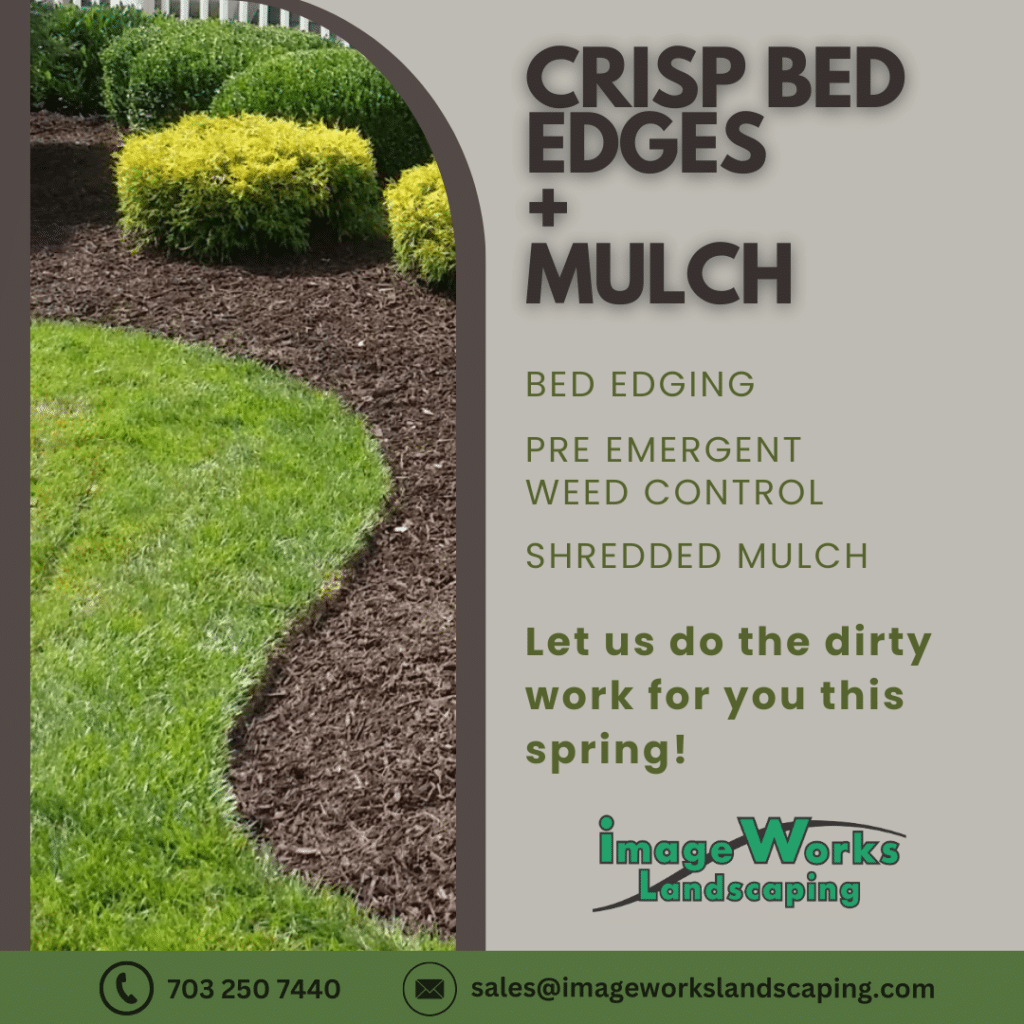
Quick Answer: Most Northern Virginia homeowners should plan to replace or refresh mulch once a year, with many beds needing attention every 12 to 18 months depending on sun exposure, rainfall, slope, and the type of mulch used. If your mulch has faded, thinned out, washed away, or started to break down into soil, it is time to refresh it so your landscape keeps its clean appearance and your plants stay protected.
If you have been wondering how often to replace mulch northern virginia homeowners should expect, the short answer is that our local climate makes mulch wear out faster than many people think. Between hot, humid summers, heavy spring rains, winter freeze-thaw cycles, and fast-growing landscapes, mulch in Northern Virginia does not stay fresh for long. For homeowners in places like Fairfax, Alexandria, Arlington, Vienna, Reston, and Springfield, mulch is not just a decorative finish. It helps control weeds, regulate soil temperature, reduce erosion, and make the entire yard look maintained. The right mulch schedule can also help you avoid bigger problems later, especially around foundation beds, drainage areas, and planting zones where moisture management matters. Knowing when to refresh mulch can save time, protect your investment, and keep your landscape looking polished all year long.
How Often to Replace Mulch in Northern Virginia
For most homes in Northern Virginia, mulch should be refreshed once a year, and in some cases every 12 to 18 months. That timeline is usually enough to maintain appearance and function without overloading the beds. If your mulch is high-quality hardwood or dyed mulch and your beds are partially shaded, it may hold up a little longer. But if your property gets full sun, strong runoff, or heavy foot traffic, the mulch can fade, thin out, and break down much faster. Homeowners often notice that by the end of one growing season, the beds no longer look full or even, especially in front yards where curb appeal matters most.
The best way to think about mulch replacement is not by calendar alone, but by condition. A bed may still have some mulch in it, but if the layer is too thin to block weeds or too broken down to protect the soil, it is no longer doing its job. In Northern Virginia, where spring storms can wash material away and summer heat can dry out exposed soil, a thin mulch layer can quickly lead to weed growth, plant stress, and a tired-looking landscape. If you are already planning other upgrades such as a patio, retaining wall, drainage correction, or lawn installation, mulch refresh timing becomes even more important because these projects often expose or reshape surrounding beds. A professional landscaping company can help you decide whether a simple top-off is enough or whether a full replacement will give you better long-term results.
Signs Your Mulch Needs to Be Replaced
The clearest sign that mulch needs attention is appearance. Fresh mulch has a rich, even color and a consistent texture. As it ages, it fades to gray or brown, starts to clump, and may look patchy or uneven. If you can see bare soil in several places, the mulch layer is too thin. If weeds are pushing through easily, the mulch is no longer providing enough coverage. Many homeowners in Northern Virginia also notice that older mulch begins to smell earthy or sour, which can indicate that it is breaking down too far and holding too much moisture. That is especially common in shaded beds around homes in Burke, Oakton, and Clifton, where damp conditions can accelerate decomposition.
Another sign is how the mulch behaves after rain. If it floats, washes downhill, or collects in low spots, the bed may have a drainage issue or the mulch may have become too light and broken down. This is common on sloped properties in areas like Fairfax Station, Lorton, and West Springfield. In those cases, simply adding more mulch may not solve the problem. The underlying grading, edging, or drainage may need to be improved first. Homeowners should also pay attention to plants. If shrubs are drying out too quickly in summer or roots are exposed after winter, the mulch layer is probably too thin. A refresh is not just about looks. It is about protecting your planting beds, reducing maintenance, and preventing small landscape problems from becoming expensive repairs later.
Why Northern Virginia Weather Changes Mulch Timing
Northern Virginia weather is one of the biggest reasons mulch does not last as long as homeowners expect. Spring can bring heavy rain and runoff that move mulch out of place. Summer heat and humidity can fade color and speed up breakdown. Fall leaves can trap moisture and create a messy layer on top of the beds. Winter freeze-thaw cycles can shift mulch, expose roots, and compact the material. In neighborhoods with mature trees and established landscapes, these seasonal changes can be even more pronounced because the beds are constantly dealing with shade, moisture, and debris.
This is why the answer to how often to replace mulch northern virginia homeowners should follow is not the same as advice you might hear in a drier or colder region. For example, a front foundation bed in Arlington that gets full afternoon sun may need a fresh application every year to keep the color and coverage looking sharp. A shaded backyard bed in Reston may not fade as quickly, but it may break down faster because the moisture stays in the soil longer. Properties with slopes, downspouts, or poor drainage often need more frequent mulch service because the material is constantly being moved or compacted. If your landscape includes a patio, retaining wall, or drainage swale, mulch should be planned around those features so it does not wash into walkways or collect against hardscape edges. A well-timed refresh helps the entire yard function better and keeps the property looking intentional instead of neglected.
How Much Mulch Do You Really Need?
Most homeowners do not need a complete mulch replacement every time. In many cases, a top-off is enough to restore the proper depth and appearance. The ideal mulch depth is usually around 2 to 3 inches. Less than that, and weeds can break through more easily. More than that, and you can trap too much moisture around plant roots or create a layered effect that prevents water from reaching the soil properly. If your beds were installed years ago and have never been refreshed, the old mulch may have decomposed into the soil so thoroughly that a simple top-off will not create the clean, finished look you want.
How much mulch you need depends on the size of the beds, the shape of the property, and whether you are working around trees, shrubs, foundation plantings, or large landscape features. For example, a small front yard in Vienna may only need a modest amount of mulch to make the entry look polished. A larger property in Woodbridge or Sterling with extensive planting beds, sloped areas, and tree rings may require a much larger volume. Homeowners often underestimate how much material is needed because mulch compacts after installation. This is one reason professional installation can be more cost-effective than doing it in stages yourself. A landscaper can calculate the right amount, spread it evenly, and make sure the depth is correct across the entire property. That matters when you are trying to protect plants and improve curb appeal without wasting money on excess material.
Cost Considerations for Mulch Replacement
Mulch refresh costs can vary based on material type, bed size, labor, access, and site conditions. A straightforward front yard refresh will usually cost less than a full-property installation that includes large planting beds, steep slopes, or hard-to-reach areas. The type of mulch also affects pricing. Standard shredded hardwood mulch is often more affordable, while premium dyed mulch or specialty products may cost more but can offer a longer-lasting appearance. If your landscape has drainage issues, edging problems, or overgrown beds that need cleanup before mulch is installed, the project may cost more because the work is more involved.
For homeowners, the biggest cost decision is often whether to do a basic refresh or invest in a more complete landscape update. If your mulch is the only issue, a seasonal top-off may be enough. But if the beds are uneven, weeds are overwhelming the area, or the landscape is being damaged by runoff, it may make sense to combine mulch replacement with larger improvements such as drainage correction, retaining wall repair, patio border updates, or lawn installation. Those upgrades can easily become $3,000+ projects, but they often solve the root cause of recurring mulch problems. In Northern Virginia, that is especially important on properties where water moves quickly after storms or where the landscape has been shaped by years of settling. Paying for a proper fix once is often better than repeatedly spending on mulch that keeps washing away or breaking down too soon.
When to Refresh Mulch Versus When to Wait
Not every mulch bed needs immediate replacement. If the mulch still has good color, the depth is close to 2 to 3 inches, and weeds are under control, you may be able to wait until the next season. This is often the case in shaded side yards or low-traffic areas where the mulch is protected from sun and wind. Waiting can make sense if you are planning a larger landscape project soon, such as a patio installation, retaining wall repair, or drainage improvement. In those situations, it is often smarter to coordinate mulch work with the bigger project so the final result looks seamless and you are not paying twice for labor in the same area.
On the other hand, waiting too long can create more work later. If mulch has thinned out enough to expose soil, weeds can establish quickly and become harder to remove. If beds are eroding, the mulch may be part of a larger drainage problem that needs attention now rather than later. Homeowners in areas like Annandale, Newington, and North Springfield often deal with older landscapes where beds have settled over time and mulch no longer stays in place. In those cases, delaying refresh work can lead to more expensive cleanup, plant stress, and curb appeal issues. A good rule is to evaluate the beds at the start of spring and again in late summer. If they look tired, uneven, or sparse at either point, it is probably time to schedule service.
Local Northern Virginia Considerations Homeowners Should Know
Local conditions matter a lot when deciding how often to replace mulch northern virginia homeowners should follow. In communities with mature trees and established neighborhoods, such as Arlington, Falls Church, and Alexandria, shade and leaf litter can speed up mulch breakdown. In newer or more open areas like Sterling, Herndon, and Reston, full sun can fade mulch faster and dry out the beds. Homes with sloped yards, common in parts of Fairfax Station, Clifton, and Lorton, may need more frequent attention because mulch tends to move during storms. Properties with poor drainage or downspouts that empty into planting beds often need a more strategic approach than just adding more material.
Another local factor is how homeowners use their outdoor spaces. If you entertain on a patio, walk through side yards often, or have kids and pets moving around the landscape, mulch can get displaced faster. That means the refresh schedule may need to be more aggressive than a low-use property. Northern Virginia homeowners also tend to invest in attractive front-yard landscapes because curb appeal matters in competitive real estate markets. A clean mulch bed can make a huge difference in how a home presents from the street, especially when paired with healthy lawn installation, crisp edging, and well-placed shrubs. If your property is being prepared for sale, or if you simply want it to look well cared for, mulch is one of the most cost-effective ways to improve the overall impression of the home. The key is timing it correctly so the beds stay fresh through the season when the property is most visible.
Homeowner Decision Checklist
- Check whether the mulch is faded, thin, or patchy.
- Look for weeds breaking through the beds.
- See if mulch has washed away after rain or storm runoff.
- Measure whether the mulch depth is still around 2 to 3 inches.
- Inspect shaded beds for sour smell, clumping, or heavy breakdown.
- Review whether drainage, edging, or slope issues are causing repeat problems.
- Decide if a simple refresh is enough or if a larger landscape project makes more sense.
- Consider combining mulch with patio, retaining wall, drainage, or lawn installation work.
- Plan service before peak curb appeal season, especially in spring and early summer.
- Call a professional if the beds are uneven, eroding, or difficult to maintain on your own.
Why Choose Image Works Landscaping
Image Works Landscaping understands that mulch is only one part of a healthy, attractive landscape. Homeowners in Northern Virginia need a company that can look at the whole property, not just the surface layer. That matters when mulch problems are tied to drainage, grading, edging, or aging landscape design. Our team works with residential properties across Annandale, Arlington, Alexandria, Fairfax, Fairfax Station, Falls Church, Oakton, Vienna, Reston, Herndon, Sterling, Woodbridge, and surrounding communities, so we understand the local conditions that affect mulch performance from one neighborhood to the next.
We also know that many homeowners want more than a quick refresh. They want a landscape that feels finished, functional, and easy to maintain. That is why Image Works Landscaping is a strong choice for projects that go beyond mulch, including patios, retaining walls, drainage improvements, and lawn installation. If your mulch is washing away every year, the real solution may be a better-designed landscape, not just another layer of material. Our goal is to help you make the right investment for your property, whether that means a seasonal mulch refresh or a larger project that improves the long-term value of your home. When you work with a local team that understands Northern Virginia soil, weather, and homeowner expectations, you get better results and fewer surprises.
Final Thoughts: The Right Mulch Schedule Protects Your Landscape
If you have been asking how often to replace mulch northern virginia homeowners should plan for, the most practical answer is once a year for many properties, with some beds needing attention sooner depending on sun, rain, slope, and use. Mulch is one of the simplest ways to keep your landscape looking clean, but it only works if it is maintained at the right depth and refreshed before it becomes thin, faded, or ineffective. Waiting too long can lead to weeds, erosion, and a yard that looks older than it should.
If your mulch beds are overdue, or if you suspect drainage or grading issues are causing repeated problems, Image Works Landscaping can help you choose the right solution. Whether you need a mulch refresh, a full landscape cleanup, or a larger improvement such as a patio, retaining wall, drainage fix, or lawn installation, our team is ready to help you protect your property and improve curb appeal. Contact Image Works Landscaping today to schedule a consultation and get a professional recommendation for your Northern Virginia home.